
This week’s stories are about tech, AI and sustainability, coming from the EU and Taiwan
Taiwan science parks post record $111 billion revenue
Taiwan’s three major science parks generated a combined NT$3.54 trillion ($111.1 billion) in revenue in the first half of the year, a 29.27% increase from the same period last year and a record high.
The growth was driven by surging demand for artificial intelligence (AI) chips and cloud services, which fueled expansion in the semiconductor industry, according to a report by the National Science and Technology Council.
I read this story at Taipei Times and Hsinchu Science Park recorded a 36.03% increase in revenue to $35 billion, while Central Taiwan Science Park’s revenue rose 20.63% to $20.8 billion. Southern Taiwan Science Park reported a 28.57% increase to $36.7 billion.
Combined trade volume at the three parks climbed 50.98% year over year to $149 billion in the January-June period. Their total revenue is projected to exceed $230 billion this year if current trends continue, the report said.
The integrated circuit industry was the largest revenue contributor among the parks’ six major industries, with sales rising 29.57% to $91.9 billion in the first half, driven by strong demand for AI and high-performance computing systems.
The optoelectronics industry ranked second, with revenue increasing 6.3% to $7.47 billion. Higher orders for fiber-optic communication modules and continued growth in uninterruptible power supply sales supported the sector, per the story.
Revenue in the computer and peripherals industry surged 82.49% to $5.15 billion, supported by strong demand for servers and related equipment. The communications industry recorded a 13.01% increase to $1.14 billion, driven by sales of key networking components.
The precision machinery industry posted a 37.65% increase in revenue to $3.7 billion, as growing AI investment boosted demand for automation systems, precision equipment and components, the story noted.
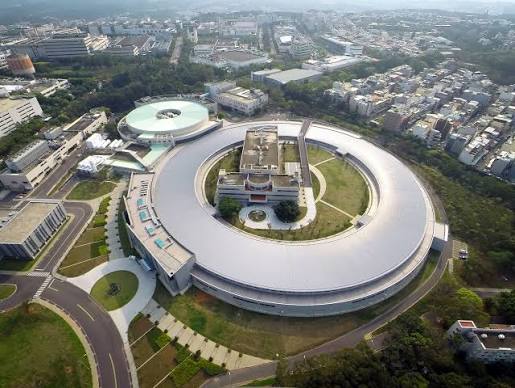
Hsinchu Science Park
Can fast fashion ever be sustainable?
Fast-fashion companies including H&M, Zara and Shein are increasingly promoting sustainability targets and environmental initiatives, but experts say their high-volume business models can conflict with efforts to reduce their environmental impact.
The companies have launched campaigns aimed at cutting carbon emissions, chemical pollution and resource use. However, corporate reports and independent data show that while the use of more sustainable materials is increasing, production volumes remain high.
I read this story at ESG Dive and H&M said in its 2025 sustainability report that 91% of the materials it used were sourced sustainably. At the same time, the company produced about 364,000 metric tons of products during the year.
H&M CEO Daniel Ervér said in the report that the company’s business model is based on offering fashion and quality at an affordable price while operating sustainably.
Inditex, the parent company of Zara, used 705,554 metric tons of raw materials in its products in 2025, up from 678,596 metric tons a year earlier. The company said 88% of the fibers it used qualified as “lower impact fibers.”
Shein, which can list as many as 600,000 products on its online platform at a time, also highlights efforts to reduce its environmental impact and improve conditions in the communities where it operates.
H&M, Zara and Shein reported sales of about $23.5 billion, $46.3 billion and more than $50 billion, respectively, in 2025.
Javad Nasiry, a professor of operations management at McGill University’s Desautels Faculty of Management, said the structure of the fast-fashion business model makes it difficult to achieve sustainability.
Nasiry said sustainability assessments should distinguish between the environmental impact of an individual product and the impact of a company’s overall production.
A t-shirt made with more sustainable materials may have a lower environmental impact per item, he said, but the overall impact can still be substantial when companies produce products at very large volumes, noted Nasiry.

Can fast fashion ever be sustainable?
EU accused of withholding data center energy and water use
A Dutch nonprofit newsroom has filed a complaint accusing the European Commission of withholding site-level information on data centers’ electricity and water consumption. (By the way I have a story here about the Netherlands )
Lighthouse Reports submitted the complaint under the Aarhus Convention, a treaty that gives the public rights to access environmental information and participate in environmental decision-making. The European Union joined the convention in 2005.
The complaint centers on rules introduced in 2024 that restrict EU institutions and national governments from publishing certain information about individual data centers.
I read this story at The Next Web and technology companies have sought such confidentiality measures on the grounds of commercial interests, leaving the European Commission largely able to publish only aggregated consumption figures.
European data centers consumed 20.7 terawatt-hours of electricity and more than 8 million cubic meters of water in 2025, according to Commission data.
The Commission recently announced an A-to-G rating system that will assess data centers based on energy efficiency, water use and clean-energy consumption. The system is scheduled to take effect next summer.
Lighthouse Reports said the system does not disclose total energy and water consumption at individual facilities and therefore does not provide enough information to assess their overall carbon footprints. The organization also argued that relying on ratios rather than absolute consumption figures favors industry interests over the public interest, the story noted.
The Aarhus Convention Compliance Committee is expected to decide in November whether the complaint is admissible. It could later determine whether the EU has breached its obligations under the convention, per the story.
The European Commission did not respond to a request for comment.

EU accused of withholding data center energy and water use