This week’s stories are about tech, AI and sustainability, coming from Denmark, Korea and the Netherlands
South Korea probes suspected AI-assisted cyberattacks on banks
South Korean authorities are investigating suspected AI-assisted cyberattacks targeting seven financial institutions that exposed the personal data of about 68,000 customers, following a directive from President Lee Jae Myung.
The National Police Agency has launched a comprehensive investigation into the breaches. Investigators suspect an open-source penetration-testing tool called Artex AI may have been used in the attacks. (By the way I have a story here about Korea)
I saw this story at the Quartz and the tool is associated with Chinese cybersecurity engineer Li Puhua, who is known by the alias Autumn. It uses AI agents to identify security vulnerabilities and automate attack planning, drawing on models from companies including Anthropic, OpenAI and DeepSeek, with limited human intervention.
South Korea’s Financial Services Commission confirmed that Shinhan Bank and KB Kookmin Bank were among the targets. Hana Bank and Woori Bank were also affected, Reuters reported. Authorities have yet to establish the full extent of the breaches, the story said.
The Financial Supervisory Service and the Financial Security Institute shared information with financial institutions about 28 IP addresses suspected of being linked to the intrusions., per the story. Officials said the addresses originated in about a dozen countries, including the United States, Japan and Germany, and are seeking international cooperation.
The Financial Services Commission convened an emergency meeting and ordered financial firms to audit internet-facing systems, strengthen access controls and authentication measures, restrict unnecessary data exposure and improve threat-intelligence sharing across the industry, the story added.

Denmark to ban unauthorized sharing of deepfakes
Denmark is preparing legislation that would prohibit the unauthorized sharing of realistic AI-generated imitations of people’s faces and voices, aiming to strengthen protections for individuals and artists against digital impersonation.
I saw this story at Euronews and the proposed amendment to the country’s copyright law would cover ordinary citizens as well as performers whose work is digitally replicated.
Culture Minister Zenia Stampe said artificial intelligence tools make it possible to create manipulated videos and images with just a few clicks and distribute them on social media. One of the bill’s main objectives is to ensure technology companies remove manipulated content quickly, limiting the potential harm, she said.
Deepfakes are images, videos or audio recordings created or altered using AI to make people appear to say or do things they never said or did. The technology has raised concerns about misinformation, privacy violations and damage to individuals’ reputations.
The proposed legislation would include exemptions for satire, parody, caricature and criticism of political power and society. However, these exceptions would not apply to misinformation that poses specified serious risks to other people’s rights, essential interests, lives or property, according to the story.
The Danish government aims to bring the law into force at the beginning of 2027.
The proposal comes as European countries develop measures to address the risks posed by AI-generated content. Under the European Union’s directive on combating violence against women, member states covered by the rules must criminalize the creation and public distribution, without the depicted person’s consent, of sexually explicit manipulated material likely to cause serious harm, per the story.
EU member states must incorporate the directive into national law by June 14, 2027. Denmark is exempt from the directive because of its opt-out from the bloc’s justice and home affairs rules.
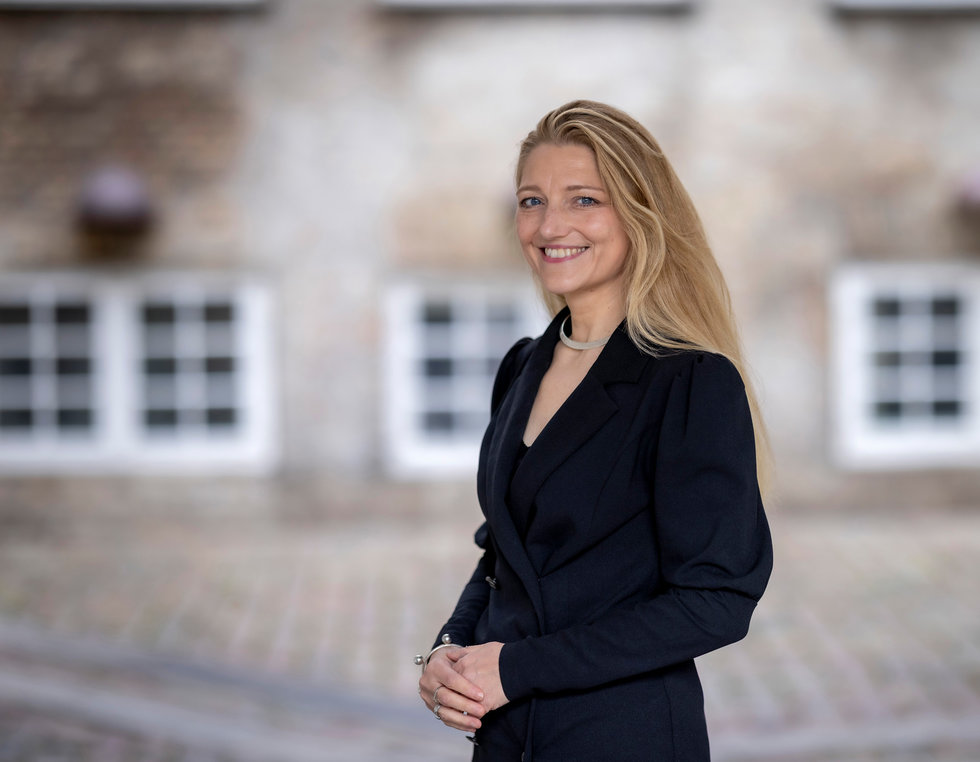
Zenia Stampe, Culture Minister of Denmark (Source: Danish Ministry of Culture)
Dutch students developed electric car capturing air pollutants while driving
Students at Eindhoven University of Technology in the Netherlands have developed VENTRA, a concept electric car designed to capture airborne particles generated by tire, brake and road wear, a growing source of urban air pollution.
I read this story at Ioplus.nl, the vehicle uses an electrostatic system called TRACE that electrically charges airborne particles and attracts them to a grounded surface. The system captures up to 42% of particles at low urban speeds and 24% when traveling between 50 and 80 kph, the story said.
Fine particles produced by tire and brake wear have been linked to cardiovascular disease, strokes and lung cancer. Although electric vehicles eliminate tailpipe emissions, their weight and high torque can contribute to tire wear and other non-exhaust emissions, per the story.
VENTRA is designed to reuse captured particles in interior components, including dashboard coatings. Its lightweight chassis, made from carbon-fiber-reinforced thermoplastic panels, reduces the vehicle’s weight by about 100 kilograms, potentially limiting wear.
The car also features Clean Drive, a system that provides real-time feedback on acceleration, braking and steering to encourage smoother driving and reduce tire and brake wear. The team incorporated 3D-printed components and flat side windows to simplify manufacturing and reduce waste, according to the story.
The vehicle was developed over about a year by a multidisciplinary team of 40 students representing 23 nationalities and eight academic fields. Let me add that VENTRA was unveiled at the Zandvoort circuit in the Netherlands on Sept. 26-27.

Students at Eindhoven University of Technology with Ventra (Photo: Sarp Gürel)