
This week’s stories are about tech, AI and gadgets, coming from Greece and the USA
100 parts of iPhone 18 Pro and Duo come from US suppliers
Apple announced that nearly 100 critical components and materials for its flagship iPhone 18 Pro and iPhone Duo devices are being sourced from U.S.-based manufacturers across more than a dozen states.
The moves reflect the technology giant’s broader strategy under its American Manufacturing Program (AMP) to expand domestic supply chain partnerships and support American workforce growth.
As part of the initiative, Apple highlighted new agreements with Pennsylvania-based titanium producer Perryman Company and Delaware-based Qnity Electronics. Apple said it will commit up to $100 million over the next three years to Perryman to produce Grade 5 titanium for the iPhone Duo’s enclosure. Meanwhile, Qnity Electronics—which joined AMP in March—will manufacture advanced films used in the iPhone 18 Pro’s variable aperture camera system.
Apple also detailed major domestic investments and milestones among several key U.S. suppliers:
- Broadcom: Modernizing its Colorado facility under a $1.5 billion investment plan to supply over 15 billion U.S.-made radio frequency chips for Apple products.
- Corning: Expanding its Kentucky facility to manufacture Ceramic Shield specialty glass, with plans to produce 100 percent of cover glass for globally sold iPhones and Apple Watches in the U.S. by the end of 2026.
- Coherent: Producing vertical-cavity surface-emitting laser (VCSEL) technology in Texas to power Face ID and the updated Dynamic Island on the iPhone 18 Pro series.
- TSMC Arizona: Scaling manufacturing at its Phoenix semiconductor facility to produce more than 100 million advanced chips for Apple devices in 2026.
- Amkor Technology: Establishing a high-volume advanced packaging and testing facility in Peoria, Arizona, expected to create 3,500 local jobs, with Apple serving as one of its primary customers.

Several US public institutions ban DeepSeek
The U.S. Department of Homeland Security (DHS) has issued a sweeping order banning the use of software and products from Chinese artificial intelligence company DeepSeek across all federal civilian agencies and IT systems.
According to an official notice published in the Federal Register, DHS cited concerns that utilizing DeepSeek technology poses a threat of transferring sensitive data of U.S. government employees and vendors to the Chinese government.(By the way I have a story here about the USA)
Under the directive, federal civilian entities—including the Environmental Protection Agency (EPA) and the Federal Communications Commission (FCC)—must exclude DeepSeek products from future operations and remove all existing integrated software from their networks. DHS noted in the filing that DeepSeek’s models could “contain malware or other security vulnerabilities” and barred the firm from participating in federal contract bidding.
The restriction comes shortly after DeepSeek released its latest AI model, V4.1-Flash-1017, which the company marketed as faster, smarter, and more efficient.
The low-cost AI developer, whose models directly challenge U.S. tech leaders such as OpenAI and Google, has faced growing scrutiny from Washington. Last year, two members of U.S. Congress introduced legislation seeking to block DeepSeek’s AI chatbot on government-issued devices.
Greece launches supercomputer to strengthen AI capabilities
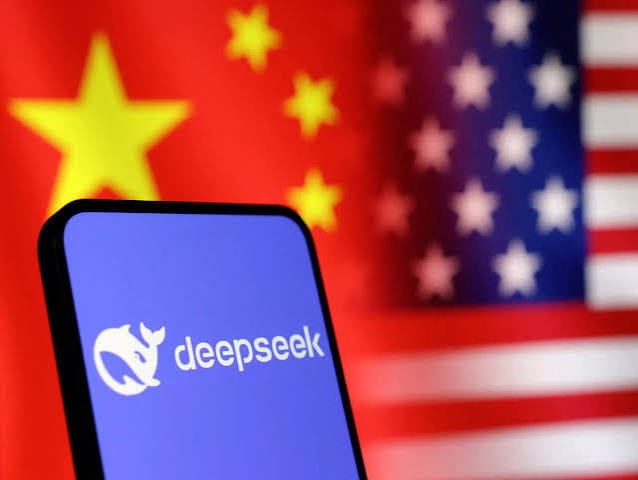
Greece has launched Daedalus, its most powerful supercomputer, in a 58.9 million euro investment aimed at expanding domestic artificial intelligence (AI) development and reducing reliance on computing infrastructure abroad.
Installed at the Lavrio Technological and Cultural Park in Attica, Daedalus delivers 85.69 petaflops of computing power and ranks 31st globally, according to available data. The system is designed to support advanced AI training, large-scale data processing and scientific research. It ranked 23rd worldwide for energy efficiency in the June 2026 Green500 list.
Broader access for businesses is planned for March 2027 through Pharos AI Factory, one of seven AI factory initiatives selected by the European Union, Euronews reported. Startups and small and medium-sized businesses could receive computing resources free of charge under certain conditions, while usage-based fees are being considered for larger companies.
The project was funded by the EU’s Recovery and Resilience Facility and EuroHPC. Hewlett Packard Enterprise supplied the equipment, while Greece’s EDYTE-GRNET oversees technical operations.
Greece is also planning a second supercomputer at the University of Western Macedonia, backed by a 21.57 million euro subproject. The system will focus on AI, cloud computing and sensitive-data analysis, with completion expected within 12 months of signing the contract.