
This week’s stories are about tech, AI and sustainability, coming from Denmark, EU and Taiwan
EU makes AI regulation less rigid
European Union (EU) lawmakers reached a deal to ease parts of the bloc’s landmark artificial intelligence (AI) law and delay implementation deadlines after mounting pressure from the technology industry.
In a statement, the Council of the EU announced the changes simplify and streamline the rules as part of a broader effort by the European Commission (EC) to relax digital regulations. (By the way I have a story here about EU and Türkiye)
Among the amendments, the timeline for enforcing rules on high-risk AI systems — including technologies involving biometrics or critical infrastructure — will be extended by up to 16 months. The rules had previously been scheduled to take effect by Aug. 2 this year, per the announcement.
The agreement also delays compliance deadlines for companies integrating AI into products such as toys, with requirements now set to apply by August 2028.
AI-related machinery already covered under industry-specific regulations will be excluded from the AI Act, lawmakers noted.
The revised framework also includes a ban on applications and systems capable of generating non-consensual sexual images or child sexual abuse material. Those restrictions are expected to take effect in December.
The proposed changes still require approval from EU governments and the European Parliament, with negotiations and formal adoption expected to continue in the coming months.
First introduced in 2023, the AI Act was widely viewed as a landmark effort to regulate AI by categorizing systems according to risk and banning applications considered harmful or unsafe. The legislation has since faced criticism from both European and US technology companies.

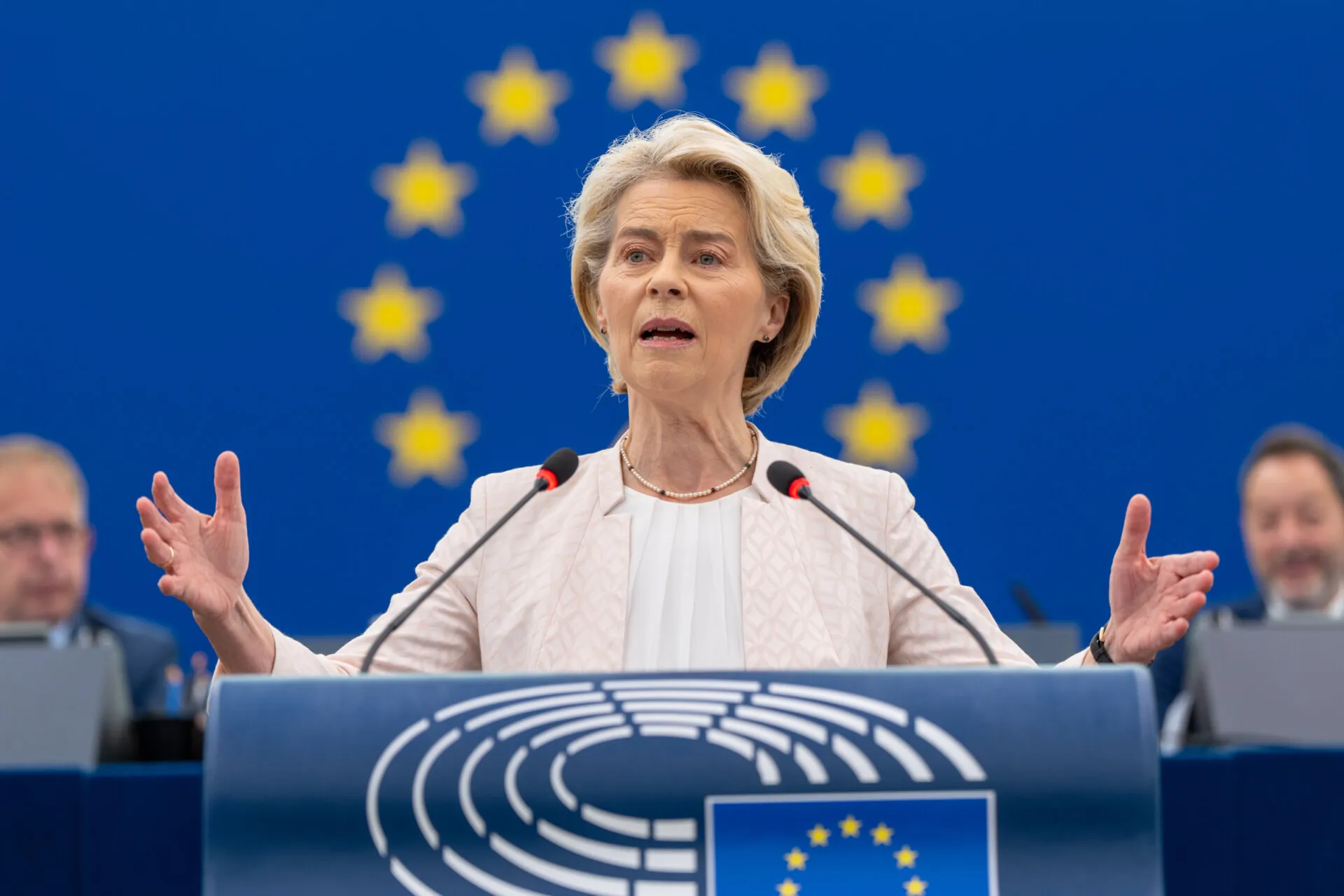
Ursula von der Leyen, President of the European Commission
Pressure on Denmark’s electricity grid as data center demand soars
Denmark is facing mounting pressure on its electricity grid as soaring demand from data centers forces policymakers and energy operators to reconsider how power capacity is allocated.
I read this story at CNBC and the debate has intensified after Denmark’s state-owned grid operator Energinet temporarily halted new grid connection agreements following what it described as an “explosion” in capacity requests. Around 60 gigawatts of projects are currently waiting for grid access, far exceeding the country’s peak electricity demand of roughly 7 gigawatts, according the story.
Data centers account for nearly a quarter of the pending applications, with proposed projects representing about 14 gigawatts of demand.
Industry representatives warned the current pause in Denmark could last longer than the initially planned three months as authorities evaluate how to prioritize access for large electricity users.
Henrik Hansen, CEO of the Data Center Industry Association, said the industry must acknowledge that available power capacity is limited.
He said the surge in applications has created what he described as a “fantasy queue,” where requested capacity far exceeds what the grid can realistically support. Hansen called for stricter criteria based on project maturity, investment commitments and societal value to determine which projects should receive priority access.
Denmark currently has about 398 megawatts of installed data center capacity, with another 208 megawatts under construction. The country’s capacity is projected to grow by roughly 1.2 gigawatts by 2030, according to industry estimates, the story noted.

TSMC signs 30-year wind power energy deal
TSMC signed a 30-year corporate power purchase agreement covering all electricity generated by the Hai Long offshore wind project, according to a company announcement.
The agreement with Canada-based power producer Northland Power includes more than 1 gigawatt of electricity capacity from three offshore wind farms located in the Taiwan Strait off Taiwan’s western coast.
Once fully completed, the Hai Long project is expected to generate enough electricity to power more than 1 million households in Taiwan. The wind farms began supplying electricity to the grid in 2025 and are scheduled to become fully operational by 2027.
Taiwanese authorities so far avoided major shortages by securing alternative liquefied natural gas supplies from countries, including Australia and the United States.
Taiwan imports nearly 97% of its overall energy needs, including electricity, transportation and heating fuels, according to the Washington-based Global Taiwan Institute.
As part of its long-term strategy, Taiwan aims to expand offshore wind generation capacity to 15 gigawatts by 2035.
TSMC also pledged to source renewable energy for 60% of its global operations by 2030 and reach 100% renewable energy usage by 2040.
The company plays a major role in Taiwan’s energy consumption because of the massive electricity demands of semiconductor fabrication plants. According to the International Energy Agency, TSMC accounted for nearly 10% of Taiwan’s total electricity use in 2023.
TSMC previously signed additional renewable energy agreements, including a 2020 deal with Danish energy developer Ørsted for 920 megawatts of offshore wind power from the Greater Changhua project and a 2021 agreement with German renewable energy developer WPD to develop more than 1 gigawatt of onshore and offshore wind capacity.

TSMC signs 30-year wind power energy deal