
This week’s stories are about tech and AI, coming from the EU and the USA
AI talent wars erode loyalty across top research labs
Competition among the world’s leading artificial intelligence (AI) companies is fueling a growing retention challenge, as top researchers increasingly move between rival firms despite multimillion-dollar compensation packages and access to cutting-edge computing resources.
I saw this story at Axios, major AI labs are finding it harder to retain elite talent even as they offer lucrative salaries, senior titles and billions of dollars’ worth of computing infrastructure. Industry executives and recruiting specialists say the small pool of top AI researchers has reshaped traditional notions of corporate loyalty, with high-profile employees frequently switching employers, the story noted.
The latest example emerged at Thinking Machines Lab, the AI startup founded by former OpenAI executive Mira Murati. Co-founder Lilian Weng recently announced her departure, citing health reasons. U.S. media reports later said she returned to OpenAI just days after leaving the startup. Weng is the fourth co-founder to exit Thinking Machines Lab within the past year, per the story.
Similar talent shifts have affected Google, which has seen prominent AI researcher Noam Shazeer join OpenAI, while John Jumper moved to Anthropic.
Industry observers say generous compensation packages and the prospect of equity gains ahead of potential public offerings remain key drivers of the talent race. Anthropic CEO Dario Amodei also expressed concern that some new hires may be motivated more by financial rewards than the company’s mission.
Recruiters and executives say compensation is only part of the equation. Access to large-scale computing resources, influence over product architecture and greater technical autonomy have become increasingly important factors for AI researchers deciding where to work, the story said.

AI talent wars erode loyalty across top research labs
EU enforces new AI rules, expands powers to fine and restrict providers
The European Union (EU) began enforcing new provisions of its AI Act governing general-purpose artificial intelligence (AI) models, giving regulators broader authority to inspect AI systems, restrict access to the EU market and impose fines on companies that fail to comply.
Under the new rules, the European Commission can levy penalties of up to €15 million or 3% of a company’s global annual revenue, whichever is higher, for violations of the AI Act.
The measures took effect on Aug. 2 and will be overseen by the European Commission’s AI Office. The rules apply to any company that offers a general-purpose AI model within the European Union, regardless of where it is headquartered, bringing U.S.-based companies including OpenAI, Anthropic and Google under the framework, according to CNBC.
The AI Act requires providers of general-purpose AI models to document key technical information and make it available to regulators or downstream providers. Companies must also establish copyright policies and publish summaries of the data used to train their models, per the story.
The bloc’s most advanced AI models, classified as posing “systemic risks,” will face additional obligations. According to the European Commission, those requirements include measures to assess and mitigate risks related to cybersecurity, fundamental rights and other potential large-scale harms.
The new enforcement regime also covers prohibited AI practices. Systems that manipulate individuals, exploit vulnerable groups or assign scores that threaten people’s fundamental rights are banned under the legislation. In addition, chatbots and other interactive AI systems must clearly inform users when they are interacting with artificial intelligence rather than a human.
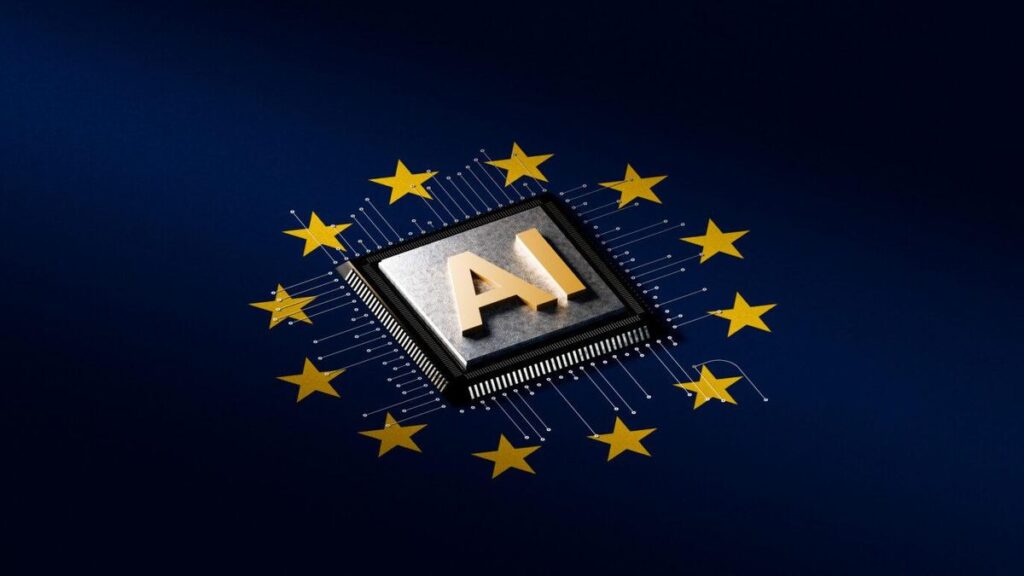
EU enforces new AI rules, expands powers to fine and restrict providers
How did Apple change under Tim Cook’s 15-year tenure?
Apple is set to enter a new chapter on Sept. 1, when CEO Tim Cook hands the company’s top job to Senior Vice President of Hardware Engineering John Ternus, ending a 15-year tenure.
According to a report by MacRumors, Apple’s annual revenue stood at $108 billion when Cook became CEO in 2011. By the third quarter of fiscal 2026, the company generated $109.4 billion in revenue in a single quarter, surpassing its entire 2011 annual revenue. Apple reported $416 billion in revenue for fiscal 2025.
The iPhone business also expanded significantly during Cook’s tenure. Revenue from the smartphone lineup rose from $47 billion in 2011 to $54.3 billion in the third quarter of fiscal 2026 alone.
Apple’s market value also climbed sharply under Cook’s leadership. The company briefly surpassed a $5 trillion market capitalization after becoming the first publicly traded company to reach the $1 trillion, $2 trillion and $3 trillion milestones in 2018, 2020 and 2022, respectively. (By the way I have a story here about Apple )
The company said its global installed base has grown to more than 2.5 billion active devices, up from 1 billion when Apple first disclosed the figure in 2016.
Services emerged as Apple’s fastest-growing business segment during Cook’s tenure. Revenue from services increased from $9.4 billion in 2011 to $30.7 billion in the third quarter of fiscal 2026. Apple also said it now has 1.5 billion paid subscriptions across its platforms.
During Cook’s leadership, Apple expanded its ecosystem with services including Apple Pay, Apple Music, Apple TV+, Apple Arcade, Apple Fitness+ and iCloud+, while introducing new hardware such as the Apple Watch, AirPods, Apple silicon chips, Vision Pro and HomePod.
Ternus, who joined Apple in 2001, led the company’s AirPods, Mac, iPad and iPhone hardware engineering teams. Cook will remain with the company as executive chairman following the leadership transition.

How did Apple change under Tim Cook’s 15-year tenure? (Photo: Apple)