
This week’s stories are about tech, sustainability and AI, coming from the EU and the USA
Chipmaking equipment drives majority of semiconductor plant costs
The soaring cost of building semiconductor manufacturing plants is being driven less by construction and more by the sophisticated equipment required to produce advanced chips, with machinery now accounting for up to 80% of a facility’s total investment.
I saw this story at qz and modern semiconductor plants, or fabs, typically cost between $10 billion and $20 billion, with most spending directed toward manufacturing equipment rather than buildings, according to an analysis by Construction Physics.
Industry costs have risen steadily over decades under a pattern known as “Rock’s Law,” which suggests chip fabrication costs roughly double every four years. TSMC committed $165 billion to its Arizona expansion, which includes six fabrication plants, two advanced packaging facilities and a research center, the story claimed.
Among the most expensive pieces of equipment are lithography systems used to imprint circuit patterns onto silicon wafers. Dutch company ASML, the dominant supplier of extreme ultraviolet (EUV) lithography machines, prices its latest systems at approximately $380 million each. A single advanced fab requires multiple units, making lithography equipment responsible for roughly one-fifth of a plant’s total cost.
Equipment availability has also become a bottleneck. ASML shipped only 44 EUV systems in 2024, only slightly more than its output in 2021.
Beyond lithography, etching and deposition tools represent another major expense. Industry association SEMI estimates these systems account for 40% to 50% of total equipment spending in advanced semiconductor manufacturing. The NGO projects investment in equipment for 300-millimeter wafer fabs will increase from $133 billion in 2026 to $151 billion in 2027.
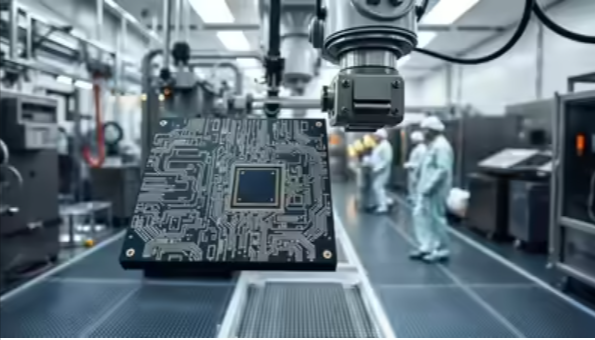
Chipmaking equipment drives majority of semiconductor plant costs
AI boom to quadruple data center electricity demand by 2035
Electricity consumption by data centers is projected to quadruple by 2035, with facilities expected to account for about one-fifth of all power generated in the United States, driven largely by the rapid expansion of artificial intelligence (AI), according to a new report from BloombergNEF.
The report forecasts that global data center capacity will approach 200 gigawatts over the next decade as demand for AI computing accelerates. Nearly half of that capacity is expected to support AI model training and inference, with the United States remaining the dominant market. By 2033, the country is projected to host 64% of global AI chip power demand.
BloombergNEF said its latest outlook marks a significant upward revision from previous estimates. The consultancy now expects electricity demand from data centers in 2035 to be 83% higher than it projected in December, reflecting the rapid pace of AI infrastructure investment.
Other industry forecasts have also been revised higher. The Electric Power Research Institute (EPRI) has more than doubled its 2024 projection for data center electricity demand, while S&P Global increased its forecast by more than one-third between October and April. (By the way I have story here about Turkey’s electricity generation)
The report warns that much of the anticipated expansion will occur in regions where electricity grids are already under pressure. The PJM Interconnection, which serves parts of the U.S. Midwest and Mid-Atlantic, is expected to allocate 34% of its electricity supply to data centers over the coming decade. In Texas, the Electric Reliability Council of Texas (ERCOT) is projected to dedicate 22% of its generating capacity to the sector.
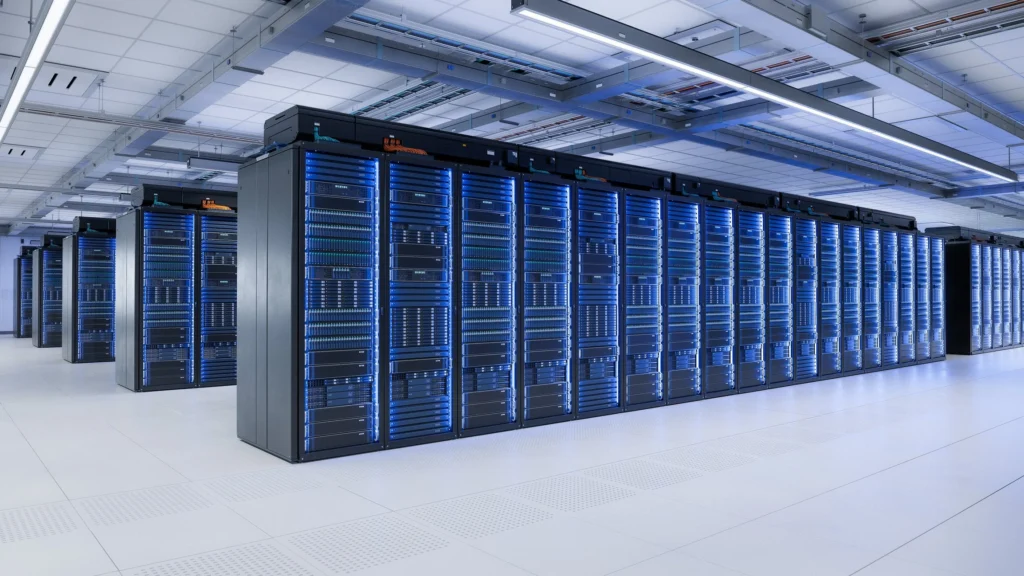
AI boom to quadruple data center electricity demand by 2035
The Huawei ban to cost €40 Billion to EU: industry group
The European Union’s effort to remove telecommunications equipment supplied by Chinese companies such as Huawei and ZTE could cost as much as €40 billion, according to a report released by telecom industry association GSMA.
GSMA estimated that replacing equipment from vendors classified as high risk would require between €30 billion and €40 billion in direct spending across the bloc. The projection is substantially higher than the European Commission’s estimate of €3.4 billion to €4.3 billion annually over three years, or roughly €10 billion to €13 billion in total.
The European Commission has proposed restricting the use of equipment from Huawei and ZTE under a new EU Cybersecurity Act, citing security concerns.
According to GSMA, replacing equipment in mobile networks alone would cost between €16 billion and €22 billion. The organization estimated an additional €5 billion would be needed for fixed-line networks and another €9 billion to €12 billion for transport network infrastructure.
The industry group also projected that reduced competition among telecommunications equipment suppliers could add approximately €8.5 billion in costs between 2027 and 2030 as operators face higher equipment prices.
Some analysts questioned the report’s methodology. Hosuk Lee-Makiyama, director of the European Centre for International Political Economy (ECIPE), said GSMA’s estimates reflect total replacement costs rather than the incremental costs directly attributable to the proposed restrictions. Accounting for equipment that would have been replaced as part of normal upgrade cycles would produce figures closer to the European Commission’s estimates, he noted.
The European Commission did not comment on the report.
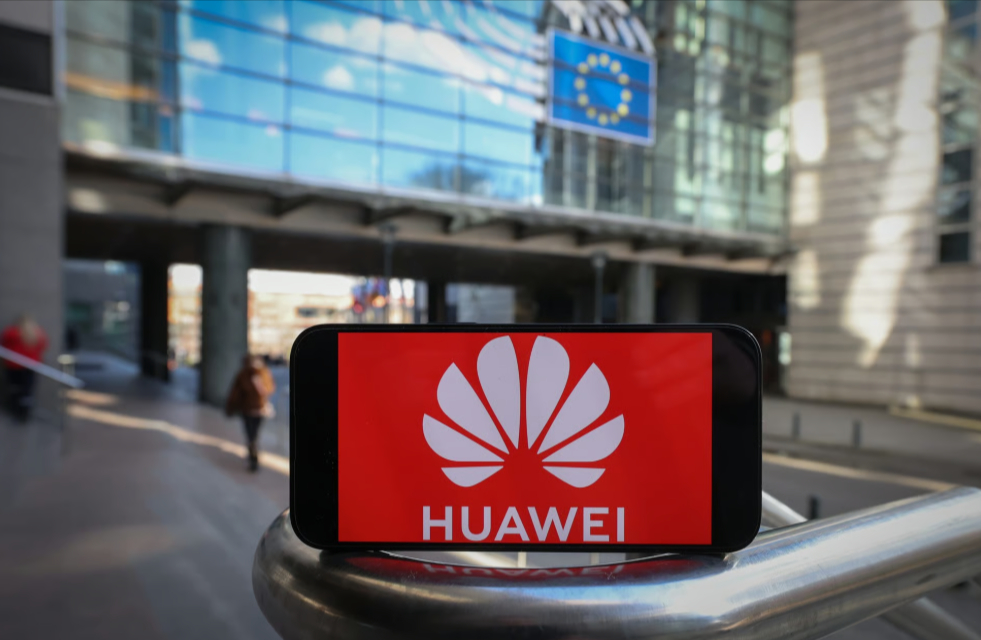
The Huawei ban to cost €40 Billion to EU: industry group (Photo: Olivier Hoslet/EFE/EPA)