
This week’s stories are about tech, AI and sustainability, coming from the EU, Korea and the USA
New York pauses large AI data centers for up to a year
New York has temporarily halted the development of large-scale data centers for up to one year while state officials develop regulations aimed at limiting the facilities’ impact on the electric grid, water resources and the environment.
I read this story at Associated Press and Gov. Kathy Hochul signed an executive order Tuesday establishing what her office described as the first statewide moratorium in the United States on new hyperscale data centers. The facilities, which support artificial intelligence (AI) and cloud computing, typically contain thousands of servers and require substantial electricity and water for cooling.
The move places New York at the center of a growing national debate over how to balance the rapid expansion of AI infrastructure with concerns about rising energy demand, environmental sustainability and consumer utility costs, according to the story.
Hochul said the state must ensure technological development does not come at the expense of higher electricity bills, strained water supplies or increased noise pollution.
Let me note that several states have considered similar restrictions on large data centers. Earlier this year, Maine debated a temporary moratorium, but Democratic Gov. Janet Mills vetoed the proposal, citing concerns that it would block a planned project in a community seeking economic investment following the closure of a local mill. While lawmakers in more than a dozen states have introduced comparable measures, most have not advanced beyond the proposal stage, though some local governments have adopted temporary bans.

New York pauses large AI data centers for up to a year
EU approves €659 million in German aid for four semiconductor projects
The European Commission (EC) has approved €659 million ($773 million) in German state aid to support the construction of four semiconductor manufacturing facilities, as the European Union steps up efforts to strengthen its domestic chip industry under the Chips 2.0 Act.
The EC said the funding will help expand Europe’s semiconductor production capacity by backing first-of-a-kind manufacturing facilities and reducing the bloc’s dependence on overseas suppliers across the chip supply chain.
I saw this story at Mobile World Live and Germany will provide direct grants of €353 million, €214 million, €74.4 million and €17.9 million for the four projects.
The largest investment will support a facility in Baesweiler, North Rhine-Westphalia, that will produce silicon carbide epi-wafers. According to the Commission, the technology is expected to play a growing role in industries including automotive, telecommunications, energy and industrial manufacturing by enabling more advanced semiconductor production. (By the way I have a story here about Germany’s first Digital Minister)
The Commission said the companies receiving the funding committed to measures designed to benefit the wider European semiconductor ecosystem. Those commitments include collaborating with universities and research institutions, prioritizing orders during supply disruptions, developing specialized workforce training programs and sharing a portion of project-related profits with the German government, according the story.
The approvals represent the 15th through 18th state aid decisions made under the EU’s original Chips Act and the recently adopted Chips Act 2.0. The Commission noted it authorized about €14.2 billion in public support for semiconductor projects under the two initiatives.

EU approves €659 million in German aid for four semiconductor projects
Automakers become key battleground as memory chip makers chase AI-driven demand
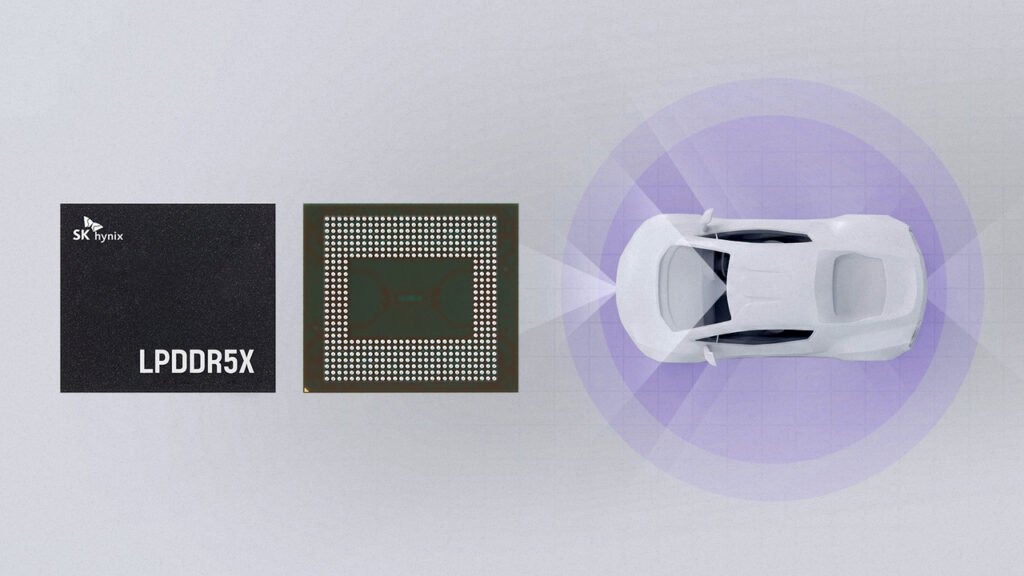
The global race among leading memory chip manufacturers is increasingly shifting toward the automotive sector, as artificial intelligence (AI) and advanced driver-assistance systems drive demand for higher-capacity memory in next-generation vehicles.
Industry leaders Samsung Electronics, SK hynix and Micron Technology are expanding their focus on automotive memory, a market that has grown more strategically important as modern vehicles require computing power comparable to that of personal computers.
I saw this story at Korea Herald and analysts say premium vehicles are now equipped with significantly larger amounts of DRAM than previous generations. Mercedes-Benz’s MB.OS infotainment platform is estimated to use between 4 gigabytes and 12 gigabytes of DRAM, while BMW’s upcoming iX3 electric SUV is expected to feature between 16 gigabytes and 24 gigabytes for cockpit computing alone. Vehicles equipped with advanced autonomous driving systems can require nearly 70 gigabytes of DRAM in total.
Memory requirements are expected to rise further as automated driving technology becomes more widespread. Micron CEO Sanjay Mehrotra said during the company’s June earnings call that vehicles with Level 2+ or higher autonomous capabilities contain more than five times the combined memory and storage capacity of conventional vehicles. The company projects Level 2+ vehicles will account for more than 20% of global vehicle sales in 2026 and over 40% by 2030.
Competition among the industry’s largest suppliers has also intensified. According to S&P Global Mobility, Samsung Electronics surpassed Micron in automotive memory market share for the first time since entering the segment in 2015. Samsung increased its share to 40% last year from 35% in 2024, while Micron’s share declined to 36% from 40%.
Automakers become key battleground as memory chip makers chase AI-driven demand