This week’s stories are about tech, AI and chips, coming from Korea, Netherlands and the USA
Global chip sales to reach $1 trillion
Global semiconductor sales are on track to reach $1 trillion this year, driven by surging demand tied to artificial intelligence (AI)
The Semiconductor Industry Association (SIA) announced worldwide chip sales totaled $791.7 billion in 2025, up 25.6% from the previous year. SIA said growth is expected to accelerate in 2026 as major technology companies continue investing heavily in data centers to support AI systems.
Advanced computing chips — including processors made by Nvidia, Advanced Micro Devices and Intel — remained the largest and fastest-growing segment of the market, SIA noted. Sales in that category jumped 39.9% last year to $301.9 billion, according to the NGO.
Memory chips ranked second, fueled by rising prices amid supply constraints linked to AI demand. Sales of memory products increased 34.8% to $223.1 billion. (By the way I have a story here about the history of chips)
The AI-driven expansion is lifting nearly all areas of the semiconductor industry, said John Neuffer, President and CEO of the Washington-based trade group.
Neuffer claimed executives at smaller chip companies expressed confidence about continued growth during recent visits to Silicon Valley, despite uncertainty about the pace of future AI investment.
“Orders are completely full” Neuffer said, adding the industry appears on a strong growth trajectory for at least the next year.

Global chip sales to reach $1 trillion
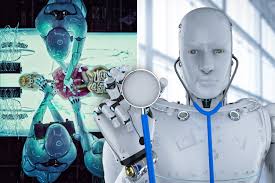
An AI robot clinician tested in Dutch hospital
An artificial intelligence-powered robot clinician has been tested in a Dutch hospital to assess whether it can help provide medical information to patients and ease pressure on healthcare staff.
The pilot project, led by researchers from the University of Twente and Medisch Spectrum Twente hospital, examined how patients and clinicians responded to a humanoid-style AI robot designed to communicate face to face.
I read this story at ioplus and healthcare systems across Europe are grappling with staff shortages and rising demand for care, particularly for patients with chronic conditions. Researchers noted clear communication remains essential, even as digital tools are increasingly used to support medical teams.
To improve trust and engagement, the team tested a Swedish-built robot known as Furhat, which uses facial animations, eye contact, lip movements and nonverbal cues to mimic human interaction, according to the story. The robot was trained using clinician-approved medical websites and powered by generative AI to answer patient questions.
After initial laboratory simulations with participants from multiple countries, the robot was introduced into a hospital setting. It interacted with 21 patients with osteoarthritis and seven healthcare professionals.
Researchers said both patients and clinicians generally accepted the robot’s physical presence and found the information it provided accurate and relevant. Patients described the conversations as accessible and pleasant, while clinicians emphasized the technology could play a useful educational role.
However, staff noted the robot sometimes delivered too much information at once and struggled with the pronunciation of medical terms. The team said broader studies across different hospitals and countries are needed to better understand how culture, digital literacy and healthcare systems affect trust and effectiveness.
An AI robot clinician tested in Dutch hospital
New AI memory technology road map announced in Korea
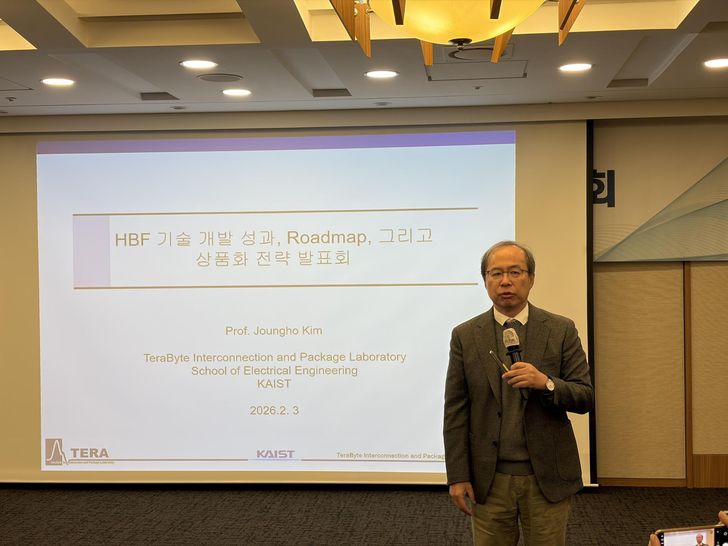
A South Korean chip authority unveiled a new memory technology road map aimed at boosting artificial intelligence (AI) performance by bringing high-capacity storage closer to computing processors.
Kim Joung-ho, Professor at the Korea Advanced Institute of Science and Technology who helped develop the basic structure of high-bandwidth memory (HBM), said that high-bandwidth flash (HBF) could become a critical component for AI inference — the process of running trained AI models in real time.
Speaking at a news conference in Seoul, Kim noted computing has so far been driven largely by graphics processing units (GPU), but memory will play a more decisive role in the next phase of AI development.
“HBM has powered the current AI boom,” Kim said. “With HBF, we aim to move toward memory-centric computing that can drive the next leap forward.”
Traditional systems rely on dynamic random-access memory (DRAM) for fast, short-term data processing and NAND flash storage for larger but slower data retention. Kim noted demand for flash storage is rising rapidly as AI services increasingly require quick access to massive datasets to deliver real-time results.
Under the proposed design, HBF would be created by vertically stacking NAND flash chips — similar to how HBM stacks DRAM — to combine large storage capacity with much higher data transfer speeds.
Kim suggested placing the new flash memory alongside GPUs and HBM in AI accelerators, allowing HBM to serve as fast nearby memory while HBF functions as a larger, high-speed storage layer.
He said commercialization could begin in late 2027 or early 2028, adding that experience gained from HBM development has shortened the timeline. Kim emphasized Samsung Electronics and SK hynix are working with major technology companies including Nvidia, Google and AMD to develop chips using the new architecture.
New AI memory technology road map announced in Korea (Photo: Korea Times)