Sharp decline in Turkish startup investments and no Series C or later-stage investments were recorded during the year
Venture capital (VC) investment in Turkish startups fell sharply in 2025, reflecting a broader slowdown across European tech markets as deal activity and funding sizes declined amid tougher global conditions, according to Startups.watch report, a Turkish startup intelligence.
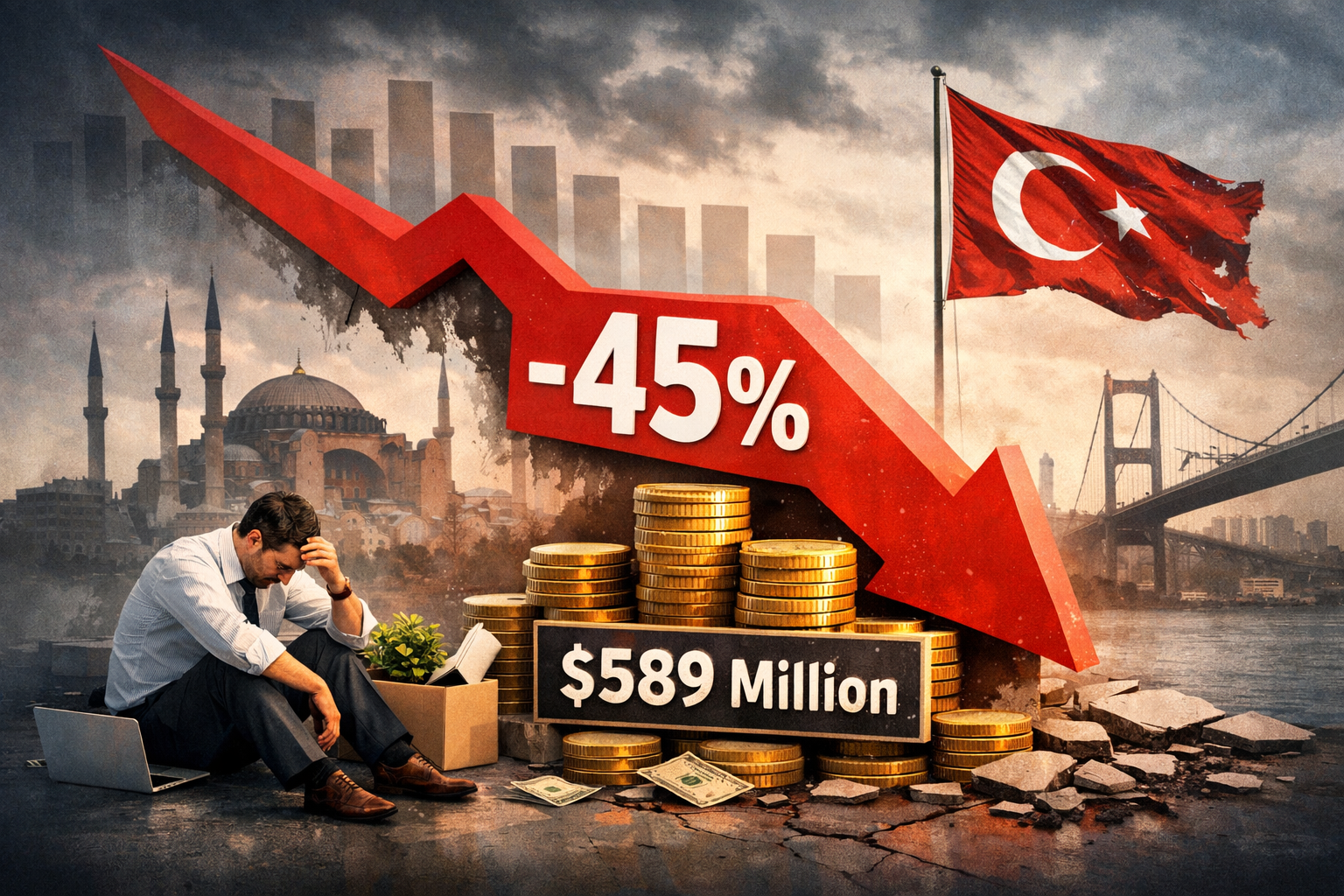
Startups in Türkiye raised $589 million across 306 disclosed equity deals last year, down 45% in total capital and 48% in deal count from 2024, Startups.watch revealed in its annual review released. The decline mirrored trends seen in major European ecosystems including Germany and France.
Later-stage venture funding dried up entirely in 2025, underscoring a long-standing weakness in Türkiye’s startup pipeline. No Series C or later-stage investments were recorded during the year, the report said, as many companies relocated abroad after early funding rounds to access deeper capital pools. (By the way I have a story here about startup investments in Turkey)
Turkish diaspora startups raised $1.1 billion across 41 deals
While domestic investment slowed, startups founded by the Turkish diaspora raised $1.1 billion across 41 deals, producing three new unicorns — Airola, Periodic Labs and Fal. Diaspora companies also dominated high-value exits through IPOs, mergers and secondary transactions.
Artificial intelligence (AI) startups accounted for one-quarter of all investment deals, but attracted a relatively small share of total funding. By contrast, fintech and gaming captured 68% of all capital deployed, with fintech reaching its highest funding level on record.
Investment activity remained highly concentrated. Seven startups received 62% of total funding, and no company raised a round exceeding $100 million, a marked shift from 2024 when multiple nine-figure deals were recorded.
Seed-stage activity remained robust, but conversion into later rounds weakened further. Türkiye’s seed-to-early-stage conversion rate stood at roughly 13%, far below levels seen in the United Kingdom, France and Germany, where rates hovered near 50%, according to the report.
Corporate venture capital participation remained strong. Three new CVCs were launched in 2025, bringing the total to 96, with corporate investors involved in roughly one-third of all deals. Over the past three years, newly established venture investment funds and VC firms generated $1.5 billion in total fund size, though median fund sizes remained modest.
Foreign investor participation edged higher as a share of deals, led by gaming and fintech investments, but remained flat in absolute terms. Overseas investors were far more active in early-stage rounds than at the seed level, the report found.
Female-founded startups accounted 22% of newly founded startups
Female-founded or co-founded startups accounted for one in four investments, while 22% of newly founded startups in 2025 included at least one female founder, the report noted.
Despite weaker funding, acquisitions and secondary transactions remained active, led by major deals involving Dream Games, Trendyol Go, n11 and Paribu’s acquisition of CoinMENA. The total number and value of transactions were broadly in line with 2024.
A survey of Turkish venture capital firms cited economic volatility, unpredictable policy and fundraising difficulties as the biggest challenges facing the ecosystem. Most respondents said raising new funds became harder in 2025, while exit conditions showed little improvement.
Startups.watch said the findings highlight Türkiye’s persistent early-stage strength alongside structural challenges in scaling companies domestically, particularly in attracting late-stage and foreign capital.
Image: ChatGPT