This week’s stories are about tech, startup and sustainability, coming from the Japan and the USA
Opposition against data centers in US goes higher, data center project halted in Virginia
A large-scale data center project in Virginia has been abandoned after sustained opposition from local residents.
I saw this story at Gizmodo and the state, which hosts more than 660 operational data centers and has hundreds more planned, had been poised to add one of the world’s largest clusters through the proposed “Digital Gateway” development. The project, spanning roughly 2,100 acres, was backed by Compass Datacenters and Brookfield Asset Management.
Local officials in Prince William County approved the plan in 2023 by a narrow 4-3 vote following a contentious public hearing. The proposal called for approximately 23 million square feet of data center space, per the story.
Despite investing tens of millions of dollars to advance the project, developers ultimately withdrew amid mounting legal challenges and diminishing local support, including reduced willingness by officials to offer tax incentives.
“Recent legal actions and compounding regulatory hurdles have effectively closed a viable path forward,” said AJ Byers, president of Compass Datacenters.
The project’s collapse reflects growing national momentum against data center construction. According to a recent report by Data Center Watch, local opposition groups have blocked more than a dozen projects across the United States, affecting an estimated $152 billion in planned investment, according to the story.
Earlier in April, officials in Manitowoc County approved an 18-month moratorium on new data center developments—the first of its kind. A similar measure in Maine passed the state legislature but was vetoed by Governor Janet Mills, the story emphasized.

Opposition against data centers in US goes higher, data center project halted in Virginia
SoftBank to start robotics company building data centers
SoftBank prepares to launch a new robotics-focused company aimed at automating data center construction.
I read this story at Techcrunch and the proposed venture, reportedly named Roze AI, is designed to improve the efficiency of building data centers in the United States. The company plans to deploy autonomous robots to assist in constructing large-scale server facilities.
In a notable move, SoftBank is already considering taking the new business public, with some executives targeting an initial public offering as early as the second half of 2026. The company could seek a valuation of up to $100 billion, according to the story.
The initiative reflects a broader trend across the tech and industrial sectors to integrate artificial intelligence and automation into traditional operations. Jeff Bezos, for instance, has co-founded a startup called Project Prometheus that aims to acquire companies in major industries and upgrade them using AI technologies, per the story.
Let me note that SoftBank has a history of backing unconventional startups, including high-profile bets that have not always succeeded. Among them was Zume, which shut down in 2023 after receiving significant investment.

SoftBank to start robotics company building data centers
Apple’s suppliers expand renewable energy use as emissions cuts stall
Apple is making progress in expanding renewable energy across its supply chain, though overall emissions reductions have recently plateaued, according to the company’s 2026 Environmental Progress Report released April 16.
The iPhone maker said it has pushed suppliers to cut emissions, conserve resources and increase clean energy adoption as part of its broader goal to become carbon neutral across its supply chain by 2030. In 2025, Apple and its direct suppliers saved billions of gallons of fresh water, added 20 gigawatts of renewable energy capacity and diverted large volumes of waste from landfills.
. Between 2021 and 2025, the company cut gross manufacturing emissions by more than half to 8.15 million metric tons of carbon dioxide equivalent, according to the report. (By the way I have a story here about Apple Türkiye)
Apple aims to reduce emissions by 75% from 2015 levels and offset the remaining share to reach carbon neutrality by the end of the decade, per the report. By 2025, emissions were down 60% compared with 2015 levels. However, emissions remained unchanged from 2024, indicating that further reductions may be more difficult to achieve.
Electricity use by manufacturing partners remains Apple’s largest source of greenhouse gas emissions. To address this, the company requires suppliers to transition to 100% renewable electricity for Apple-related production by 2030 under its Supplier Code of Conduct.
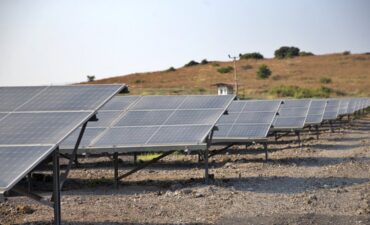
In 2025, suppliers added more than 20 gigawatts of renewable energy capacity, helping avoid over 26 million metric tons of greenhouse gas emissions. Much of this expansion has been driven by new procurement approaches in key manufacturing hubs, including China, Japan and South Korea, the report noted.
Apple’s suppliers expand renewable energy use as emissions cuts stall