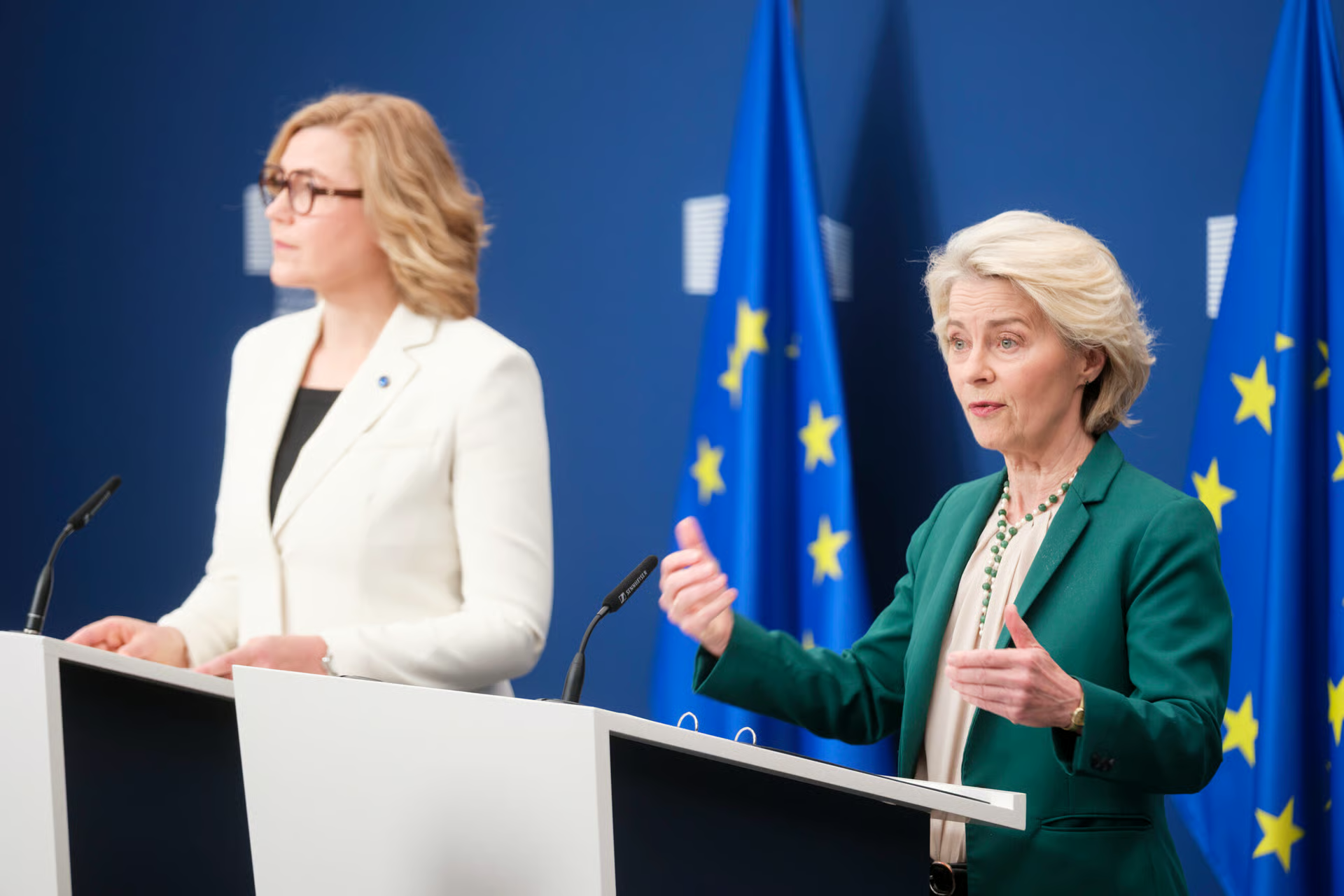
This week’s stories are about tech, AI and sustainability, coming from the EU, UK and Uzbekistan
UK backs AI startups with £500M Sovereign AI fund
The British government said it will invest £500 million to support domestic artificial intelligence (AI) startups, aiming to accelerate growth, create jobs and strengthen national security by building homegrown AI capabilities.
The initiative, known as Sovereign AI, will provide funding and infrastructure support to early-stage companies, including access to supercomputing power, fast-track visas for global talent and research and development resources, according to a statement released by the Department for Science, Innovation and Technology.
Officials said the program is designed to ensure that AI companies are founded, scaled and retained in the United Kingdom, rather than relocating abroad as they grow.
The Sovereign AI Unit will operate with a venture capital-style model, making direct investments in promising startups and helping them expand rapidly. Its first equity investment will go to Callosum, a London-based company developing AI infrastructure systems.
Six additional startups — Prima Mente, Cosine, Cursive, Doubleword, Twig Bio and Odyssey — will receive access to the U.K.’s AI Research Resource (AIRR), a network of high-performance supercomputers. Each company will be granted significant computing capacity, a key requirement for training advanced AI models.
The government said startups backed by the initiative will also benefit from up to 1 million hours of GPU compute, expedited visa approvals within one working day and assistance navigating regulation, procurement and data access.
The Sovereign AI Unit is also in talks with around 30 additional firms for potential support and has launched a funding call as part of a broader £282 million research and development program to help companies build datasets and related assets.
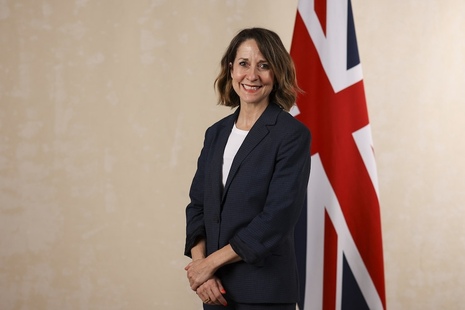
Liz Kendall, Technology Secretary of the UK (Photo: Gov.UK)
EU: age verification app ready for rollout
The European Union’s (EU) age verification application is technically ready and will soon be made available to the public, European Commission President Ursula von der Leyen said.
I saw this story at European Commission’s website and von der Leyen underlined the tool will play a central role in the bloc’s efforts to protect minors from online harms and mental health risks linked to social media use.
The app will allow users to confirm their age through government-approved verification systems, while ensuring the protection of personal data and privacy, according to EU officials.
“We are holding online platforms accountable that do not protect enough our kids,” von der Leyen announced, adding that the new technology will complement stricter enforcement of EU digital rules.
The initiative is part of broader EU efforts to safeguard children online. Several member states are also considering or implementing restrictions on social media access for minors.(By the way I have a story here about EU about invitation for Türkiye to join common payment system)
The application has already been tested in multiple countries, including France, Denmark, Greece, Italy, Spain, Cyprus and Ireland in recent months, the article noted.
EU Technology Chief Henna Virkkunen emphasized the system is designed to work alongside national digital identity tools, including so-called digital wallets, and stressed the need for a coordinated EU-wide accreditation framework.
Virkkunen added that users will remain “in full control” of their data when using the application.
Separately, von der Leyen has convened a panel of experts to prepare recommendations on a potential EU-wide social media ban for minors, expected by the summer, per the announcement.
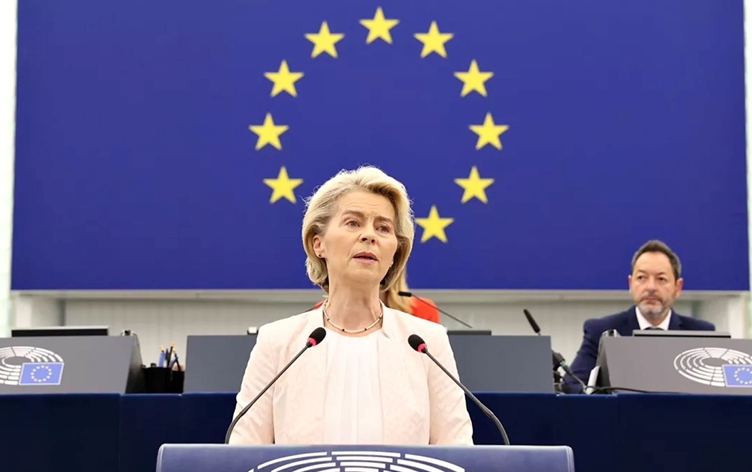
Ursula von der Leyen, President at European Commission
Uzbekistan signs $6 billion deal for Central Asian biofuel hub
Uzbekistan officials finalized a $6.08 billion agreement to construct a biofuel complex in the Khorezm region, signaling the nation’s intent to become a primary producer of sustainable aviation fuel (SAF) in Central Asia.
The agreement, signed in Perth by regional governor Jurabek Rakhimov and Allied Biofuels FE LLC representative Alfred Benedict, outlines the development of an integrated facility designed to produce SAF, electro-synthetic aviation fuel, and green diesel.
I saw this story at ESG News and the project is expected to reach an annual output exceeding 160,000 tonnes of SAF. The initiative distinguishes Uzbekistan as an emerging market leader by investing in domestic production infrastructure rather than relying on imported fuel or carbon offset credits, per the story.
According to project specifications, the Khorezm facility will utilize a “closed-loop” production model. This system integrates renewable energy sources to power the plant while utilizing agricultural feedstocks and captured carbon emissions as primary raw materials, the story underlined.
The strategy aims to meet rigorous international standards for lifecycle emissions reductions. Industry observers note that for the global aviation sector, which faces significant hurdles in decarbonization, SAF represents one of the most viable methods for lowering emissions in the near term.
By consolidating feedstock processing, fuel synthesis, and energy generation within a single ecosystem, developers intend to stabilize costs and mitigate supply chain volatility often associated with the nascent green fuel industry, according to the story.

Uzbekistan signs $6 billion deal for Central Asian biofuel hub