

This week’s stories are about tech, AI and sustainability, coming from Europe and the USA
Germany remains Europe’s top patent innovator: EPO
Germany retained its position as Europe’s leading innovator in the patent race in 2025, ranking second globally behind the United States, according to European Patent Office (EPO).
The EPO announced in its annual Patent Index that it received 201,974 applications last year, marking a 1.4% increase from 2024 and the first time filings have exceeded 200,000 in a single year.
Demand was driven by advances in artificial intelligence (AI), quantum computing and next-generation wireless technologies, although AI was not the top field for patent activity, the report noted.
The USA remained the largest source of applications, with 47,008 filings. Germany led among European countries and ranked second overall, followed by China, which posted a 9.7% increase. Japan and South Korea placed fourth and fifth, respectively.
France, Switzerland, the Netherlands, the United Kingdom and Italy completed the top 10.
Quantum technologies recorded the highest growth rate, with a 38% increase in filings, while AI-related applications rose by nearly 10%. European applicants held the largest share in both segments,as a side note.
Electrical machinery and energy ranked third, followed by medical technology and transport. Pharmaceutical filings fell about 6%, while biotechnology applications declined roughly 3%. (By the way I have a story here about EU and the payment system)
Among companies, Samsung, Huawei, LG, Qualcomm and Nokia were the top applicants for Unitary Patents in 2025.
The Unitary Patent system, launched in 2023, allows a single application to provide protection across 18 European Union countries. Filings under the system have surpassed 80,000, with a 28% uptake rate last year. For European applicants, the rate reached 40%.
Let me note that the report also found that women were named in one in four patent applications, up slightly from the previous year. Spain had the highest share of women inventors at 42%, followed by Finland, Belgium, France and Denmark.

Germany remains Europe’s top patent innovator: EPO
Oscar-winning filmmakers take on AI in ambitious documentary years in the making
A group of Oscar-winning filmmakers set out to create what they hoped would be a definitive documentary on artificial intelligence (AI).
The teams behind Everything Everywhere All at Once and Navalny first discussed collaborating during the awards circuit, initially believing they could complete the project within a year. Instead, “The AI Doc: Or How I Became an Apocaloptimist” took nearly three years to reach audiences.
I saw this story at AP News and co-directed by Daniel Roher and Charlie Tyrell, and co-produced by Daniel Kwan, the film seeks to move beyond daily headlines and explore the broader implications of rapidly advancing AI technology.
Despite the challenges, the team was driven by the urgency of AI’s impact and the belief that the film could serve as both an introduction and a call to action. Tristan Harris of the Center for Humane Technology said the project aims to raise awareness about potential risks and societal consequences tied to the technology.
The documentary features a wide range of voices, including industry leaders such as Sam Altman, Dario Amodei and Demis Hassabis, among more than 40 interviewees. The filmmakers compiled thousands of pages of transcripts to capture diverse perspectives.
Rather than presenting a single conclusion, the film explores both the risks and potential benefits of AI, according to the story. It includes warnings about misuse and economic disruption, alongside optimistic views of advancements in medicine, creativity and innovation.
Let me note that the concept of “apocaloptimism” — a blend of optimism and concern about the future — anchors the film’s message. Roher said he believes both positive and negative outcomes are possible, depending on how society responds, per the story.

Oscar-winning filmmakers take on AI in ambitious documentary years in the making (Photo: Getty Images)
Apparel industry falling short on decarbonization: report
The global apparel sector is reducing carbon emissions too slowly to meet international climate goals, with only marginal progress in recent years, according to Cascale’s report.
Let me explain that Cascale was known as the Sustainable Apparel Coalition, a collective of over 300 organizations in the apparel, footwear and textile industries that was originally founded in 2009 by Walmart and Patagonia. The report analyzed 2023 and 2024 energy data from the Higg Facility Environmental Module, which measures environmental impact across garment and material manufacturing, known as Tier 1 and Tier 2.
I saw this story at ESGdive and coal remains a major barrier to decarbonization, accounting for 31% of the industry’s energy use and 40% of global Tier 2 energy consumption. Renewable energy adoption is slowly increasing, but it still represents just 2% of total energy consumption and showed no growth between 2023 and 2024, according to the report.
The analysis introduced a new metric, Effective Energy Carbon Intensity, which converts facility electricity use into the equivalent primary fossil fuel energy to allow comparisons across energy types. The report examined facilities in China, India, Bangladesh, Vietnam, Turkey, Pakistan and Sri Lanka, as a side note. In some countries, such as China, Turkey and Vietnam, emissions clustered near the average, while in India, Sri Lanka and Pakistan, facility emissions varied widely, making national averages less informative, the story noted.
The findings align with a July 2025 assessment by the Apparel Impact Institute, which reported a 7.5% increase in industry greenhouse gas emissions from 2022 to 2023. Let me add that a United Nations report in late 2025 noted that global emissions hit a record 57.7 gigatons in 2024, up 2.3% from the previous year.
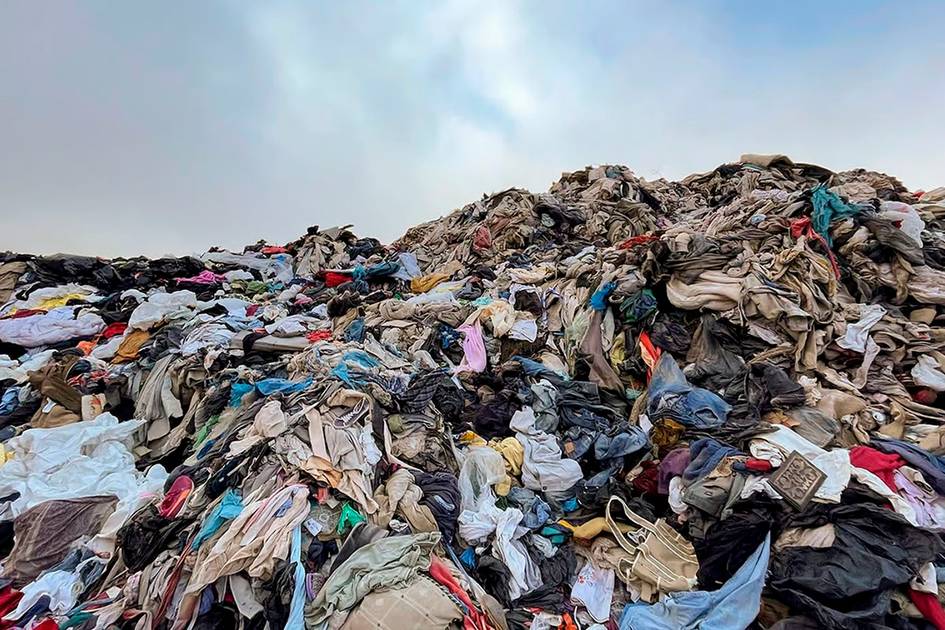
Apparel industry falling short on decarbonization