This week’s stories are about tech, AI and social media, coming from Australia, Korea, Netherlands and the USA
Global AI race and Greenland’s rare earth minerals
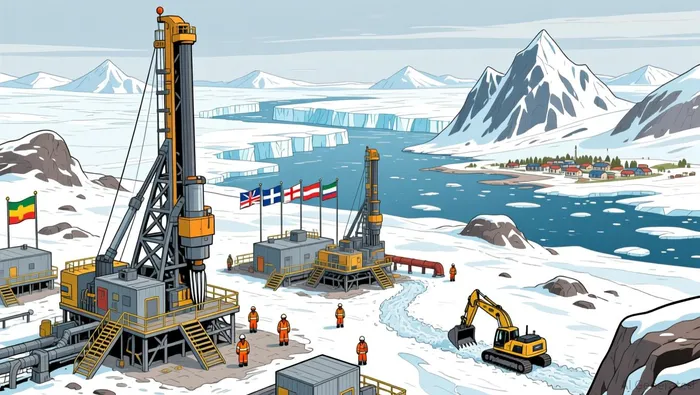
Greenland’s vast reserves of rare earths and other critical minerals are drawing renewed geopolitical attention as the United States seeks to secure supply chains vital to artificial intelligence (AI) and other advanced technologies amid intensifying competition with China.
I saw this story at NBC News and The U.S. Geological Survey identifies 60 minerals as critical to the American economy and national security, including rare earth elements such as neodymium and dysprosium, which are essential for magnets, electric motors and advanced electronics. Other critical minerals play a key role in semiconductor manufacturing that underpins the rapid expansion of AI technologies.
Greenland’s mineral wealth is the product of ancient geological processes that left the island with deposits ranging from gold and iron to copper, graphite and rare earths. According to the USGS, Greenland holds the world’s largest rare earth reserves among territories or countries without active mines. However, harsh weather, geographic isolation, environmental safeguards and volatile commodity prices have limited development.
Mining experts have questioned whether Greenland’s deposits justify the high costs of extraction and transport. Ted Feldmann, founder of Durin Mining Technologies, said expanding the U.S. presence in Greenland could make sense from a strategic standpoint but warned that many deposits may not be commercially viable, according to the story.
Greenland also holds significant reserves of germanium and gallium, minerals used in fiber-optic cables, semiconductors, data centers and emerging technologies such as quantum computing.
Despite more than 140 active mineral exploration licenses, only two mines are currently operating in Greenland, as a side note.
Greenland’s vast reserves of rare earths draw geopolitical attention
Social media companies in Australia remove 4.7 mio under 16 accounts
Social media companies operating in Australia removed millions of underage accounts in the early weeks following the country’s ban on children under 16 using such platforms, according to the nation’s eSafety Commissioner.
I read this story at Mobile World Live and platforms deleted about 4.7 million accounts belonging to underage users in the first half of December, early data submitted by the companies show. (By the way I have a story here about Instagram ban in Turkey)
eSafety Commissioner Julie Inman Grant announced she is encouraged by the initial results, noting that regulatory guidance and ongoing engagement with social media firms are already producing tangible outcomes.
In a statement, Inman Grant cautioned that while immediate improvements are visible, broader cultural and behavioral changes — and their positive effects on Australian children and families — may take years to fully emerge, according to the story.
Grant said Australia is still in the early stages of implementing the ban and that platforms are adopting different compliance strategies based on their individual operations, leading to variations in reported data and outcomes.
Earlier this week, Meta Platforms said it removed nearly 550,000 accounts across Instagram, Facebook and Threads between Dec. 4 and Dec. 11 as part of its efforts to comply with the new law, the story noted.
Social media companies operating in Australia removed millions of underage accounts
Netherlands and Korea deepen cooperation in semiconductor and quantum computing
South Korea and the Netherlands agreed to deepen cooperation in semiconductor and quantum computing technologies, aiming to strengthen their global competitiveness as international trade tensions intensify.
I read this story at Yonhap News Agency reported that the two countries signed a letter of intent during a biennial joint innovation committee meeting held in The Hague. The agreement is designed to expand collaboration in advanced technologies amid ongoing restructuring of global supply chains, according to the story.
South Korea’s Ministry of Trade, Industry and Resources said the partnership builds on more than 40 joint research and development projects launched since 2016, the story noted. The ministry added that the initiative is partly intended to help both countries respond to shifting supply chain dynamics.
Choi Yeon-woo, Head of Industrial technology at the Ministry, said he hopes the new agreement will mark the beginning of another decade of cooperation between the two nations, per the story.
Specific details of the planned collaboration were not disclosed, as a side note.
The two countries also reached a separate agreement in November 2025 to develop a joint strategy addressing emerging digital challenges, including cybersecurity and the responsible military use of artificial intelligence.
South Korea and the Netherlands agreed to deepen cooperation in semiconductor and quantum computing