
This week’s stories are about tech and AI, coming from the EU, Taiwan and the USA
EU ends buying telco equipment from high-risk suppliers, expected to hit Huawei
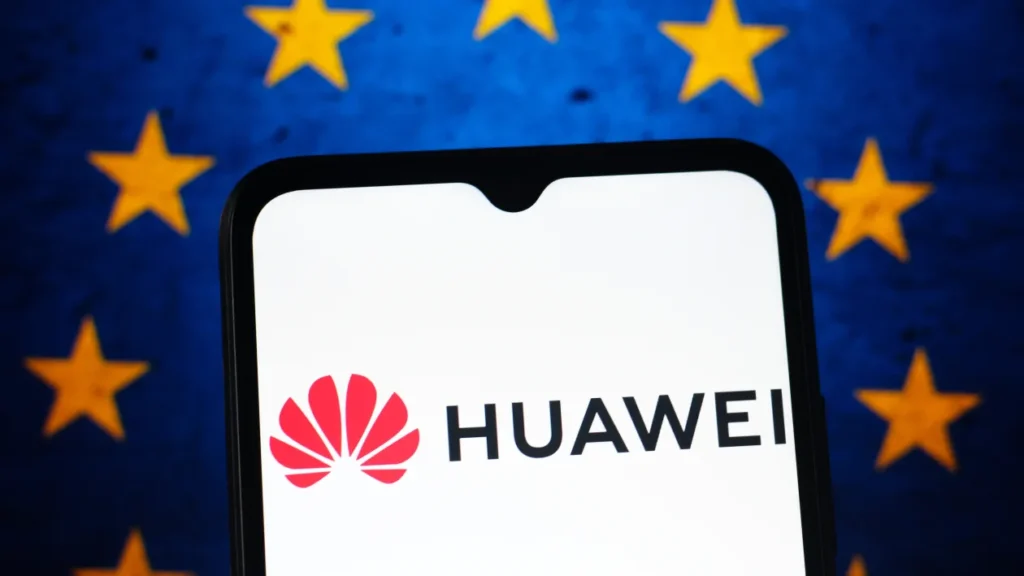
The European Commission (EC) unveiled plans to phase out equipment from so-called high-risk suppliers in critical infrastructure, a move expected to hit Chinese telecom companies Huawei and ZTE.
I read this story at Mobile World Live and the proposal, which includes revisions to the EU’s Cybersecurity Act, follows growing concerns about vulnerabilities in the bloc’s ICT supply chain amid heightened geopolitical tensions.
The EC said recent security incidents underscored weaknesses in existing systems, arguing that supply chain security now extends beyond technical performance to include risks tied to suppliers, strategic dependencies and potential foreign interference.
Without naming specific companies or countries, the EC explained the revised legislation would allow for mandatory measures to reduce risks in European mobile networks stemming from high-risk suppliers based outside the EU.
The initiative builds on the EU’s 5G security toolbox introduced in 2020, which encouraged coordinated safeguards across member states. While those measures recommended limiting the use of high-risk vendors, they stopped short of imposing binding requirements, and several countries continue to rely on Huawei and ZTE equipment. (By the way I have a story here about Huawei and the company’s support for the Turkish software developers)
Huawei criticized the proposal, warning it could violate EU legal principles and World Trade Organization rules. A company spokesperson said excluding suppliers based on country of origin rather than technical evidence would be discriminatory.
If approved by the European Parliament and the EU Council, the proposal would take effect immediately. Member states would then have one year to incorporate the directive into national law.
EU ends buying telco equipment from high-risk suppliers, expected to hit Huawei
AI eats tech lobbying
Artificial intelligence (AI) reshaped the technology lobbying landscape in Washington in 2025, eclipsing long-standing policy battles and altering how major companies seek influence in the U.S. capital.
I read this story at Axios and lobbying disclosures show Meta led all tech companies last year with $26.3 million in federal lobbying spending, followed by Amazon at $18 million and Google at $13 million. Apple spent $10 million, while Microsoft and Oracle each reported more than $9 million. Among AI-focused firms, Nvidia spent $5 million, AMD $4.9 million, venture capital firm Andreessen Horowitz $3.5 million, Anthropic $3.1 million and OpenAI $3 million.
While overall spending levels among AI companies remain well below those of the largest tech platforms, their growing role has reshaped policy priorities across Washington.
Debates that once centered on social media moderation, privacy and antitrust enforcement have increasingly given way to discussions around national security, infrastructure and the strategic importance of AI to U.S. global competitiveness. Regulation of advanced AI models has taken a back seat as the White House has emphasized the need for American AI companies to succeed, while states have moved more aggressively on AI safety policies.
New coalitions focused on semiconductors, computing power, cloud services and data center infrastructure have gained influence, in some cases rivaling or surpassing traditional Big Tech players as they seek approvals to expand nationwide, the story noted.
AI companies have expanded their lobbying efforts as they push into regulated sectors such as health care. Anthropic, which recently launched a health care-focused version of its Claude model, hired three new lobbying firms since December, according to federal disclosures. OpenAI supplemented its in-house lobbying with firms including DLA Piper and Akin Gump Strauss Hauer & Feld.

AI eats tech lobbying
AI fuels Taiwan’s industrial output
Taiwan’s industrial production surged to a record high in 2025, climbing more than 16% from a year earlier as strong global demand for artificial intelligence (AI) applications drove growth, the Ministry of Economic Affairs announced.
Government data showed the industrial production index rose 16.7% year over year to 112.16. Manufacturing, which accounts for more than 90% of total output, increased 17.87% to 113.12.
I read this story at Focus Taiwan and output in the electronics components sector jumped 24.71% last year, while production in the computer and optoelectronics industry surged 56.43%, the ministry said.
In December alone, industrial production increased 21.57% from a year earlier to 131.76, marking the 22nd straight month of growth. Manufacturing output rose 22.98% to 133.94.
The ministry announced demand for AI applications continued to boost orders for 12-inch silicon wafers, chip design, packaging and testing services, and memory chips. As a result, electronics component production rose 19.32% in December from a year earlier.
Production in the computer and optoelectronics industry more than doubled in December, soaring 133.1% year over year, driven by investment in semiconductors and rising demand for servers and chip inspection equipment, the ministry said.
The ministry also pointed to a trade agreement between Taiwan and the United States that lowers tariffs on Taiwanese goods, putting the island on equal footing with major competitors and potentially benefiting traditional industries.
AI fuels Taiwan’s industrial output