
This week’s stories are about tech, AI and sustainability, coming from Korea and the USA
New York signs new AI legislation
New York Gov. Kathy Hochul has signed legislation requiring developers of the most powerful artificial intelligence (AI) systems to adopt formal safety frameworks, disclose key information about their models and report serious incidents to the state, establishing what state officials called the nation’s strongest AI transparency law.
The measure, known as the RAISE Act, requires large developers of so-called frontier AI models to publicly outline their safety protocols and notify the state within 72 hours after determining that an incident causing critical harm has occurred. It also creates a new oversight office within the New York State Department of Financial Services to review compliance and issue annual public reports.
Hochul said the law sets a clear standard for accountability as AI technology advances faster than existing regulations.
Under the legislation, the state attorney general is authorized to bring civil actions against developers that fail to submit required reports or provide false information. Penalties can reach $1 million for a first violation and up to $3 million for subsequent violations.
The Department of Financial Services, which will house the new oversight office, said it has already played a central role in shaping rules for the responsible use of artificial intelligence in financial services and will support the law’s implementation.
Supporters of the bill said the legislation balances innovation with public safety at a time when AI is driving major advances in science, medicine and productivity, while also raising concerns about misuse and unintended consequences.
State Sen. Andrew Gounardes, a sponsor of the bill, called the measure a “major win” for public safety and economic growth, saying it demonstrates that technological innovation and consumer protection can advance together.
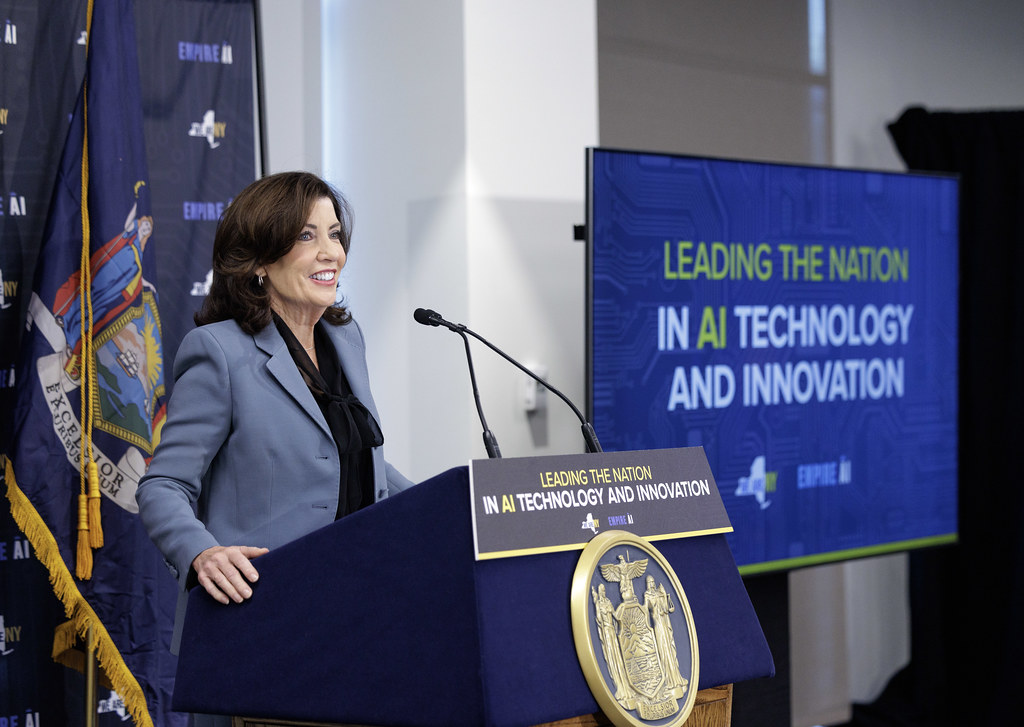
Kathy Hochul, Governor at New York
Want to buy a smartphone in Korea? Verify with your face
New smartphone users will be required to verify their identity through facial recognition in Koera beginning this week, under new rules aimed at curbing fraud and other smartphone-related crimes.
I saw this story at Korea Herald and the measure requires customers to complete facial authentication when activating a newly purchased smartphone, whether the device is bought online or in person, according to government and telecommunications authorities. The rule applies to the country’s three major mobile carriers — SK Telecom, KT and LG Uplus — as well as smaller, low-cost providers. (By the way I have a story here about Korea and OpenAI’s new office in Korea)
Until now, customers were only required to present an identification card to activate a phone. Under the revised system, users must also take a facial photograph using the PASS authentication application as part of the setup process, according the story.
Officials said the policy is intended to prevent crimes such as voice phishing and smishing, which are frequently carried out using phones activated with stolen or falsified identification.
The government said the system was tested through a pilot program involving the three major carriers and 43 low-cost mobile operators. Authorities plan to expand the requirement to all budget carriers starting March 23 next year, the story noted.
Responding to concerns over the collection and potential misuse of biometric data, government officials and telecom companies said facial information will not be stored and will be used solely for identity verification purposes, the story emphasized.
Photo: Newsis
Whole Foods introduces in-store food waste infrastructure
Whole Foods Market plans to roll out automated, in-store food recycling systems beginning in 2027, becoming the first grocery retailer to deploy technology from Mill Industries that converts food waste into chicken feed for suppliers.
The Amazon-owned grocer announced the back-of-house infrastructure will track food waste in real time and use artificial intelligence (AI) to identify what is being discarded, how much and how it can be reused more efficiently. The initiative is intended to support Whole Foods’ goal of cutting food waste by 50% by 2030.
The system, developed by Mill Industries, uses advanced camera vision and AI-powered software to measure and categorize food scraps, particularly fruit and vegetable waste. A dehydration process reduces the volume of waste by about 80%, producing a shelf-stable material that can be reused, according to the company.
Mill Co-Founder and President Harry Tannenbaum said the process simplifies store operations, lowers transportation costs and improves food safety, while allowing suppliers to receive the recycled material as feedstock. Whole Foods plans to use the resulting grounds as a nutrient-rich chicken feed ingredient for its private-label egg suppliers, he added.
Amazon’s Climate Pledge Fund has invested in Mill Industries to support the full commercial deployment of the technology, which is also expected to reduce carbon emissions linked to food waste management.
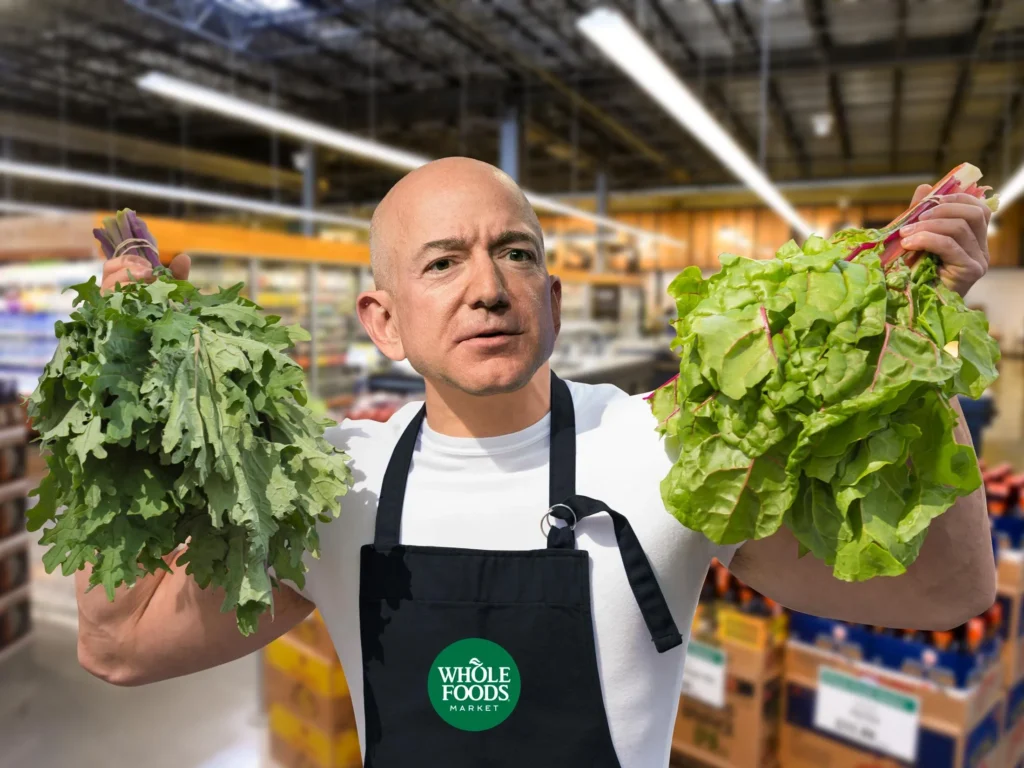
Whole Foods introduces in-store food waste infrastructure (Photo: Bloomberg)