This week’s stories are about tech, AI and sustainability, coming from Denmark, the EU and the USA
Denmark invests €67 million to expand AI supercomputer Gefion
Denmark plans to invest an additional 500 million Danish kroner (approx. 67 million Euros) in its Gefion supercomputer to expand the country’s artificial intelligence (AI) computing capacity, with the goal of supporting business growth, creating jobs and enabling public institutions to use AI while safeguarding sensitive data.
According to an announcement by the Export and Investment Fund of Denmark, the funding will support the infrastructure and operations of Gefion, which is run by the Danish Centre for AI Innovation (DCAI).
Authorities have not yet disclosed how the additional funding will be allocated or when the expanded computing capacity will become available.
I read this story at Euronews and Denmark launched Gefion in 2024 with 1,528 Nvidia chips. The DCAI said the supercomputer is approaching full capacity.
The new investment builds on an initial 700 million Danish kroner (approx. 94 million Euros) provided by Denmark’s state investment fund and the Novo Nordisk Foundation. The foundation is closely linked to Novo Nordisk, the pharmaceutical company behind diabetes and weight-loss drugs such as Ozempic.(By the way I have story here about Denmark)
The investment is intended to translate greater computing power into economic growth.
Martin Lidegaard, Denmark’s Minister for Business and Competitiveness, said the additional capacity would help companies and researchers turn ideas into new solutions, businesses and jobs, per the story.
Another objective is to allow public institutions and businesses to benefit from AI technology while maintaining control over sensitive data, the story noted.

Denmark invests €67 million to expand AI supercomputer Gefion
EU falls behind on AI safety and infrastructure targets
Sixteen European Union member states have missed a deadline to appoint national authorities responsible for enforcing the bloc’s artificial intelligence (AI) law, while a 30 billion-euro investment program to expand AI infrastructure has also been delayed because of administrative and budgetary setbacks.
I read this story at Politico, EU leaders recently met in Dublin to discuss ways to strengthen Europe’s competitiveness in AI and address emerging safety risks, highlighting difficulties in meeting key targets across the bloc.
The meeting brought together leaders from all 27 EU member states to discuss measures aimed at making Europe safer and more competitive in AI.
However, 16 countries have failed to meet the deadline for appointing national authorities tasked with overseeing the implementation of the EU AI Act.
Under the legislation, member states were required to designate their national enforcement authorities by August 2025.
According to the European Commission, Austria, Belgium, Bulgaria, Croatia, Slovakia and Hungary have yet to appoint an authority.
Sergey Lagodinsky, a German Green Party member of the European Parliament, said governments’ failure to meet their obligations was undermining the credibility of Europe’s ambitions in AI.
Another key issue on the EU agenda is reducing Europe’s dependence on the United States and China for AI infrastructure.
The bloc had planned a 30 billion-euro investment program to support the development of seven AI computing centers across Europe.
However, the body overseeing the initiative extended the application deadline for consortia seeking to build the facilities at the end of October.
The delay was attributed to member states needing additional time to complete national budgetary procedures and submit their financial commitments, per the story.

EU falls behind on AI safety and infrastructure targets (Photo: Getty)
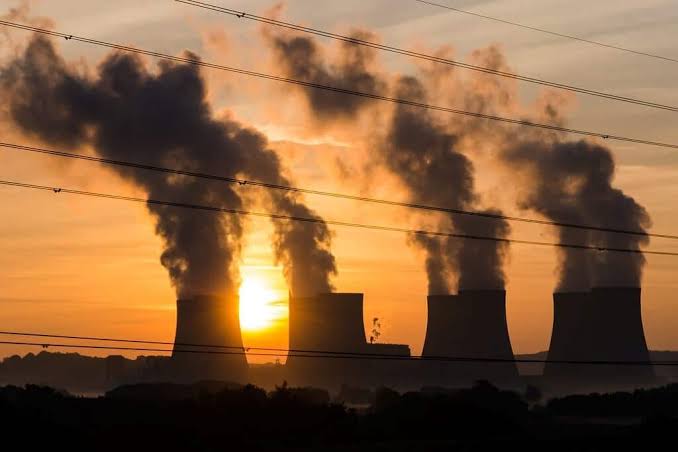
Global fossil fuel emissions expected to decline in 2026, but drop may be temporary
Global carbon dioxide emissions from fossil fuels are projected to fall 0.4% in 2026 compared to 2025, but scientists caution that the decline is unlikely to mark the beginning of a sustained downward trend.
I read this story at Gizmodo and geopolitical tensions in the Middle East and disruptions to oil supplies are among the main factors behind the expected decrease.
The 2026 Global Carbon Budget, published by the Global Carbon Project, estimates that emissions from fossil fuel consumption will decrease by 0.4% this year. In 2025, global emissions rose 1.1% from 2024, reaching a record high, the story said.
Robbie Andrew, a senior researcher at the Center for International Climate Research (CICERO) and one of the report’s authors, noted restrictions on energy supplies caused by developments in the Middle East were the main reason for the projected decline. He described the decrease as a temporary fluctuation rather than a lasting shift.
Under normal conditions, approximately 20 million barrels of oil and crude petroleum pass through the Strait of Hormuz each day, accounting for about a quarter of global seaborne oil trade. The 2026 Iran war has severely disrupted shipping through the strategic waterway, triggering the largest oil supply disruption in the history of the global market.
The report projects that oil-related CO2 emissions will fall 1.9% in 2026, while emissions from natural gas are expected to decline 0.3%. Coal-related emissions, however, are forecast to increase 0.6%, according to the story.
The expansion of renewable energy has also contributed to the projected decline in emissions, according to the report. Increased solar and wind power capacity, advances in battery technology and the growing adoption of electric vehicles have helped reduce reliance on fossil fuels, the story underlined.
Global fossil fuel emissions expected to decline in 2026, but drop may be temporary
P.S: To read the above stories in my LinkedIn newsletter, click here