This week’s stories are about tech and AI, coming from Taiwan and the USA
New AI and deepfake regulations before US midterms
New state laws taking effect in 2026 will address artificial intelligence (AI), paid family leave, health insurance costs and voting rules as states move to fill policy gaps left by Congress and prepare for this year’s midterm elections.
Across the country, legislatures have enacted measures targeting the growing use of AI in health care and elections, expanding paid family and medical leave programs and responding to rising Affordable Care Act premiums after federal subsidies expired.
States continue to lead on AI regulation amid the absence of federal legislation. In 2025, 38 states passed AI-related laws, including measures aimed at preventing the use of deepfakes in elections and regulating how AI is used in medical settings, according to the National Conference of State Legislatures.
I saw this story at NBC and Tim Storey, the group’s chief executive, said AI remains a priority for states despite a December executive order from President Donald Trump seeking to curb state-level regulation in favor of a national framework. The order, issued after Congress failed to pass AI legislation, does not pre-empt state laws.
Several states enacted laws addressing AI’s role in health care. California passed legislation prohibiting AI developers and companies from misleading patients into believing they are interacting with licensed medical professionals. Oregon adopted a similar law barring AI systems from using the title “nurse” when providing medical advice.
Other states focused on elections. Montana and South Dakota passed laws requiring disclosures when deepfakes are used in political campaigns, measures expected to apply during the 2026 midterms, the story noted. Deepfakes — digitally altered images, audio or video — have increasingly been used to spread false information, including during the 2024 presidential campaign.
Congress has not passed legislation banning election-related deepfakes.

New AI and deepfake regulations before US midterms (Image: Getty Images)
Big Tech data center expansion faces growing resistance from local communities
Across the United States, residents are organizing against a rising number of proposed data centers that are growing larger as companies seek proximity to power supplies and faster network connections. I saw this story at Associated Press and communities are learning from one another’s efforts as opposition spreads beyond traditional tech hubs into rural towns and suburbs.
Local governments are struggling to determine whether data centers — which consume large amounts of electricity and water — fit within existing zoning rules. Some municipalities lack zoning regulations altogether, while others are considering new ordinances or exemptions.
Andy Cvengros, who helps lead data center advisory work at real estate firm JLL, said he has seen opponents organize door-to-door campaigns, yard signs and coordinated protests in several recent projects.
Data Center Watch, a project of AI security firm 10a Labs, reported a sharp rise in community and regulatory challenges. Between April and June 2025, it tracked 20 projects worth a combined $98 billion that were blocked or delayed in 11 states, representing about two-thirds of proposals under review, according to the story.
Opposition often centers on fears of higher electricity costs, loss of farmland or open space, environmental damage and declining property values, the story noted. Residents also cite noise from server operations, diesel backup generators and the potential strain on wells and aquifers.
Major technology companies — including Microsoft, Google, Amazon and Meta — declined to comment to The Associated Press. Microsoft, however, acknowledged the risk in an October regulatory filing, citing community opposition and local moratoriums as potential barriers to infrastructure development.
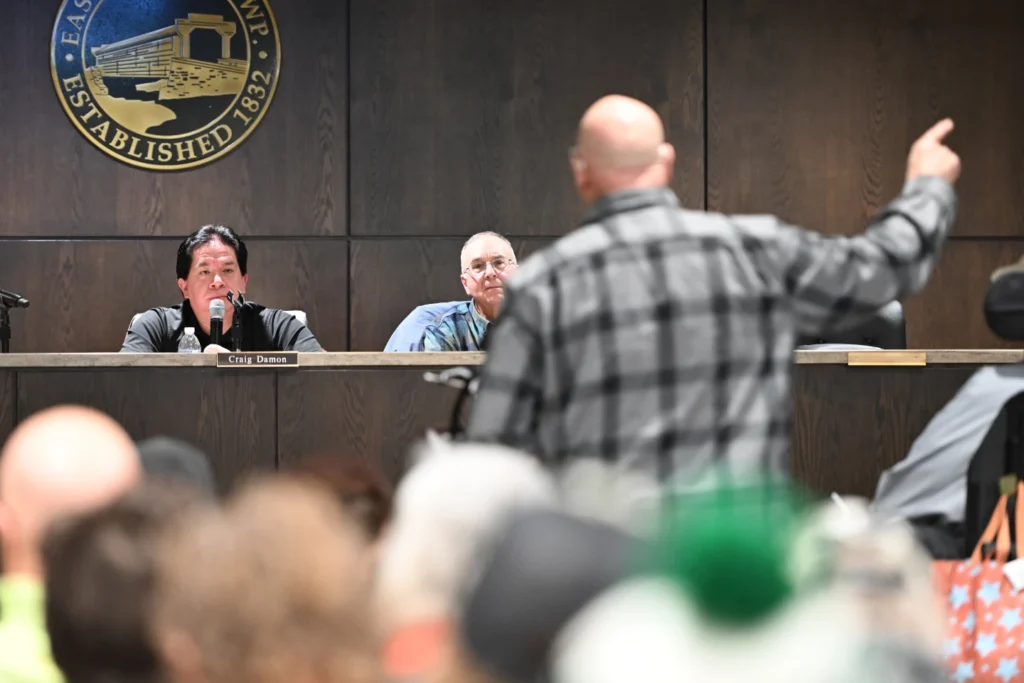
Big Tech data center expansion faces growing resistance from local communities (Photo: Marc Levy / AP)
Nvidia seeks to boost H200 chip output as Chinese demand surges
Nvidia has approached Taiwan Semiconductor Manufacturing (TSMC) to increase production of its H200 artificial intelligence (AI) chips as it races to meet strong demand from Chinese technology companies, according to people familiar with the matter.
I read this story at Taipei Times and Chinese firms have placed orders for more than 2 million H200 chips for delivery this year, while Nvidia currently has about 700,000 units available, the sources said. The size of any additional order from TSMC has not been disclosed, according to the story. (By the way I have a story here about Nvidia)
One source said Nvidia has asked TSMC to begin manufacturing extra H200 chips, with production expected to start in the second quarter. The H200 is built using TSMC’s 4-nanometer process and is part of Nvidia’s previous-generation Hopper architecture, the story noted.
Nvidia has finalized which H200 versions it plans to sell to Chinese customers and has priced the chips at roughly $27,000/unit, the sources said.
An expanded H200 production run would come as Nvidia is prioritizing its newer Blackwell chips and preparing to roll out its next-generation Rubin line. The company plans to fulfill initial Chinese orders from existing inventory, with the first shipments expected to arrive before the Lunar New Year in mid-February.
Most of the more than 2 million chips ordered this year are from major Chinese internet companies, which view the H200 as a significant upgrade from products currently available to them, the sources said.
Of Nvidia’s current inventory, about 100,000 units are GH200 superchips that combine Nvidia’s Grace central processing unit with its Hopper graphics processing architecture. The remaining units are standalone H200 chips, and both versions are expected to be offered to Chinese buyers.
Nvidia seeks to boost H200 chip output as Chinese demand surges